• SUNY Fackbook
  • SUNY Linkedin
  • SUNY Youtube
Categories
News

Fully automatic recycling and processing waste circuit board production line

A new type of waste circuit board recycling process and equipment with strong applicability and high environmental protection. The production line is a fully automatic production line, using advanced physical method recycling technology, which can effectively treat all kinds of waste printed circuit boards and processing waste. Mechanical crushing and recycling of electrical appliances, etc., the metal recovery rate is high, and the purity of the recovered metal is as high as 98%.

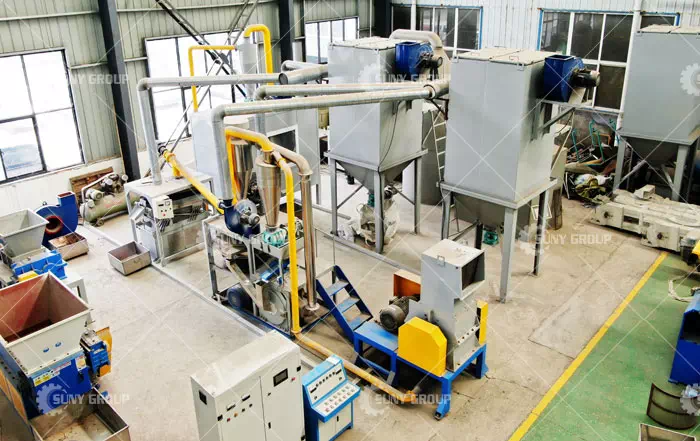
recycling and processing waste circuit board production line

recycling and processing waste circuit board production line

The waste printed circuit board is a mixture of glass fiber reinforced grease and various metals, which is a typical electronic waste. The metal grade in the circuit board is equivalent to tens to hundreds of metal grades in ordinary minerals, and the metal content is high. Reaching 40%, the most is copper, in addition to gold. Aluminum. Nickel. Lead. If it is not properly handled and disposed of, it will not only cause a large loss of useful resources, but also contain a large number of teratogenic, mutagenic and carcinogenic substances such as cadmium brominated flame retardants, which will cause serious damage to the environment and human health. This paper introduces a fully automatic recycling and processing waste circuit board production line with high environmental protection and high efficiency suitable for my country’s national conditions.

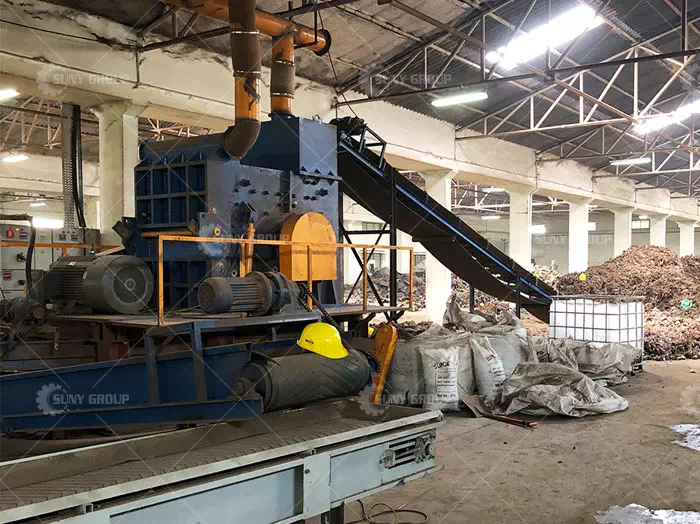
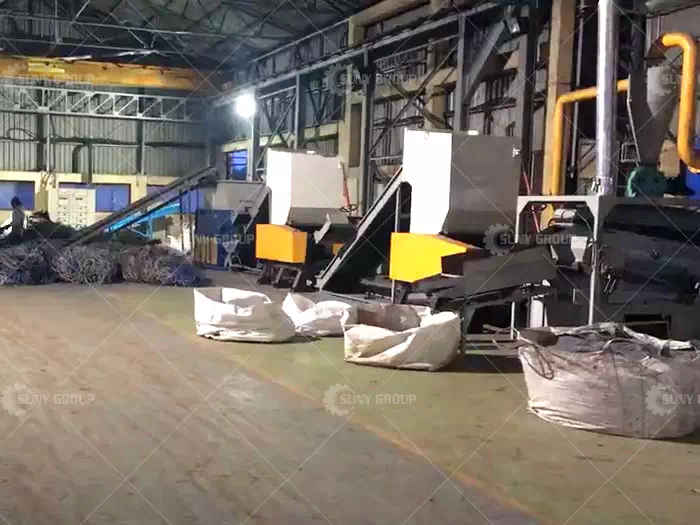
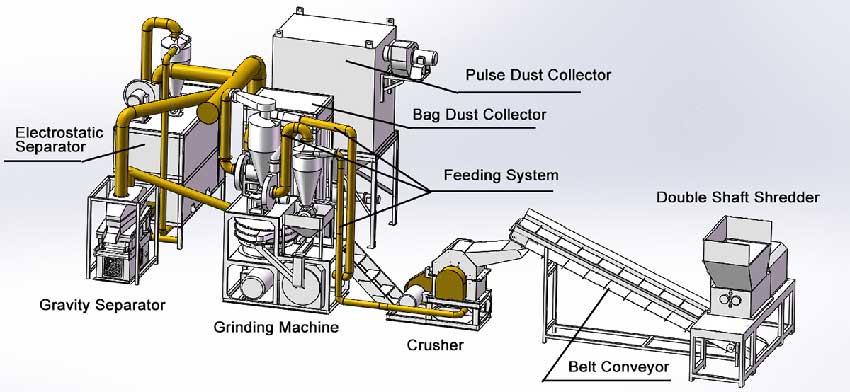
The circuit board recycling production line is mainly composed of conveyor, primary crusher, secondary crusher, magnetic separator, pulverizer, sorting machine and other auxiliary equipment. After the waste circuit boards are manually dismantled, the harmful electrical components such as batteries, transformers, etc. and reusable parts are removed, and the remaining parts are sent to the primary crusher by the scraper conveyor to crush the materials to less than 20mm. , and then sent to the secondary crusher to crush the material to less than 5mm, the iron-containing material is separated by the magnetic separator, and the remaining material is crushed to a powder of about 2mm by the crusher, so that the copper in the multi-layer machine board can be separated. , The light dust is separated first by air selection, and the material with larger specific gravity is sent to the electrostatic separator to separate and recover about 20% of non-ferrous metals (copper, etc.).

Categories
Case

Indian customer lithium battery installation site

Indian customer lithium battery installation site

Indian customer lithium battery installation site

Categories
Case

Indian customer waste motor stator crushing and recycling production line

Indian customer waste motor stator crushing and recycling production line

Indian customer waste motor stator crushing and recycling production line

Categories
News

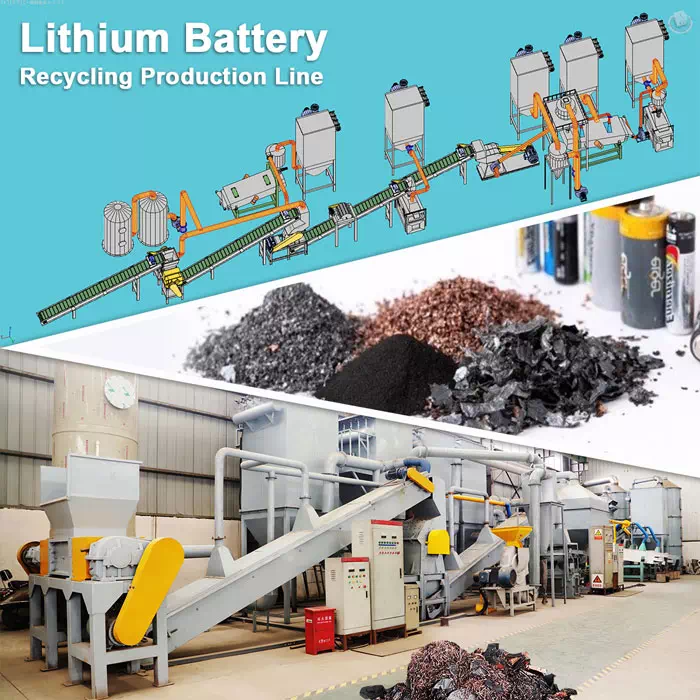
Lithium-ion battery recycling technology

Lithium-ion battery consists of positive electrode, negative electrode, electrolyte, separator, current collector, shell and other parts. Mix the positive electrode material, conductive agent and organic binder of the battery evenly and apply it to both sides of the aluminum foil current collector. Mix the negative electrode material, conductive agent and organic binder evenly and apply it to both sides of the copper foil current collector. The separators are separated, all immersed in an organic electrolyte, and finally wrapped with a casing. Waste lithium-ion batteries must be completely discharged before recycling to ensure that there is no harm to the human body, and then disassemble, remove the outer casing, separate the positive and negative electrode materials, current collectors, electrolytes, etc., and then proceed to the next step of recycling.

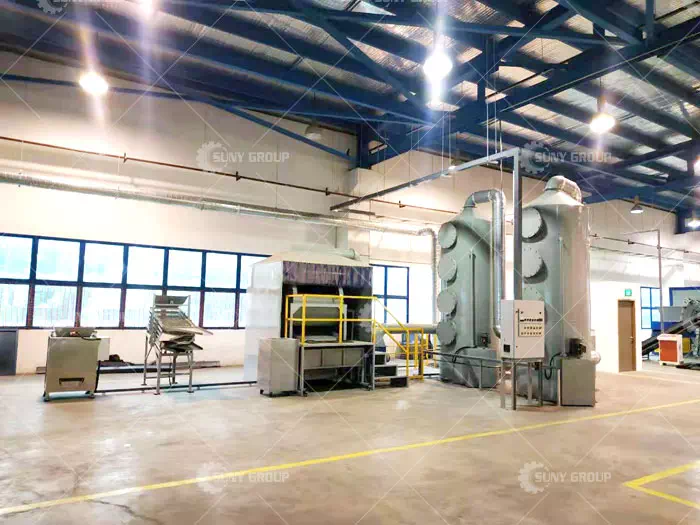
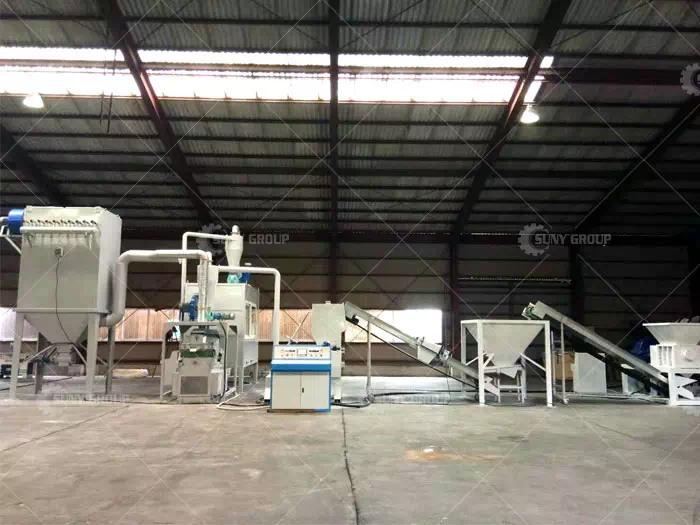
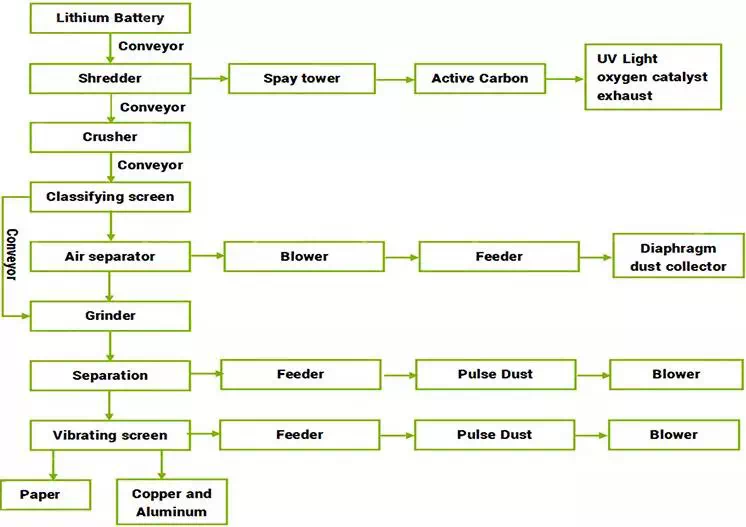
Lithium battery recycling production line

Recycling of lithium-ion battery shells, lithium battery shells include steel shell (square type is rarely used), aluminum shell, nickel-plated iron shell (used for cylindrical batteries), aluminum-plastic film (soft packaging), etc., as well as the cap of the battery, that is, the battery Positive and negative terminals. Before recycling the shell, the waste lithium battery needs to be discharged and pretreated before it can be disassembled. The disassembled plastic and iron shell can be recycled. Usually there are: mechanical crushing and screening method, that is, through mechanical crushing, sieving, and sorting out the shell material.

Cathode material recycling

Lithium-ion batteries use lithium-containing compounds as the positive electrode, with only lithium ions and no metal lithium. Usually lithium manganate, lithium cobalt oxide, lithium iron phosphate, lithium nickel cobalt manganate and other materials, most of the active material of lithium ion battery cathode still uses lithium cobalt oxide, because lithium nickel cobalt manganate combines with lithium manganate The advantages of both materials and lithium cobalt oxide have attracted the interest of many researchers, and it has great potential as a power battery for electric bicycles and electric vehicles.

With the depletion of such non-renewable mineral resources, and the positive electrode material accounts for 40% of the total cost of the battery, if the heavy metals such as cobalt, nickel, and lithium in the positive electrode material are effectively recovered, waste will be turned into treasure, and the recycling of materials will be realized. It can not only alleviate the crisis of mineral resources and achieve sustainable development, but also bring huge economic benefits.

Recycling of anode materials

There are many types of negative electrode materials for lithium batteries: ① Metal materials, such as lithium metal. ②Inorganic non-metallic materials, mainly carbon materials, silicon materials and other non-metallic composite materials. ③ transition metal oxides. At present, carbon, graphite and non-graphite carbon materials are widely used. Due to its excellent cycle life, safety and rate performance, lithium titanate can also be used as a negative electrode material in electric vehicles.

The mutual peeling between the carbon powder and the copper foil is effectively achieved by hammer crushing, and then the copper foil and the carbon powder are preliminarily separated according to the vibration sieving of the difference in size and shape between the particles. The copper foil is enriched in the particle size range greater than 0.250 mm and the carbon powder is enriched in the particle size range of less than 0.125 mm, which can be directly recycled according to the particle size. For broken particles with a particle size of 0.125-0.250 mm, the air separation method was used to achieve effective separation between copper and carbon powder. The resource utilization of metal copper and carbon powder in the negative electrode material of waste lithium battery can be realized by the combined process of hammer crushing, vibration screening and air separation.

Recovery of Organic Electrolyte and Separator

After the electrode and separator are soaked in a suitable solvent for a certain period of time, the electrolyte will be completely removed into the solvent. Polycarbonate (PC) has a relatively large relative permittivity, which is conducive to the dissolution of lithium salts. After soaking the electrolyte and separator in PC solvent for a period of time, the recovered electrolyte LiPF6 can be reused in the battery.

With the development of science and technology, lithium batteries have been greatly improved in terms of safety and service life, but the recycling of lithium batteries has not kept pace. With the overall increase in demand for new energy vehicles, lithium-ion batteries will be in short supply. If there are only battery manufacturers, no battery recycling institutions, and nowhere to dispose of waste batteries, the development of new energy will lose its original meaning. The recycling and reuse of power lithium-ion batteries is imminent. In short, the realization of the sustainable development of lithium batteries is closely related to alleviating the energy crisis, ecological environment, energy conservation and emission reduction, which is beneficial to the country and the people, and has a huge role in promoting industrial development.

Categories
Case

SouthKorea Customer’S Waste Circuit Board Dismantling Equipment Installation Site

SouthKorea Customer'S Waste Circuit Board Dismantling Equipment

SouthKorea Customer’S Waste Circuit Board Dismantling Equipment

Categories
News

Electronic Waste Recycling Production Line

With the improvement of people’s living standards, waste of electronic products such as mobile phones, computers, and TV sets is increasing. If not properly disposed of, it will bring harm to human health and the ecological environment. Standardizing the recycling of electronic waste” has become a hot topic. Our company produces and manufactures electronic waste recycling equipment and domestic waste recycling and processing equipment that can solve these problems very well.

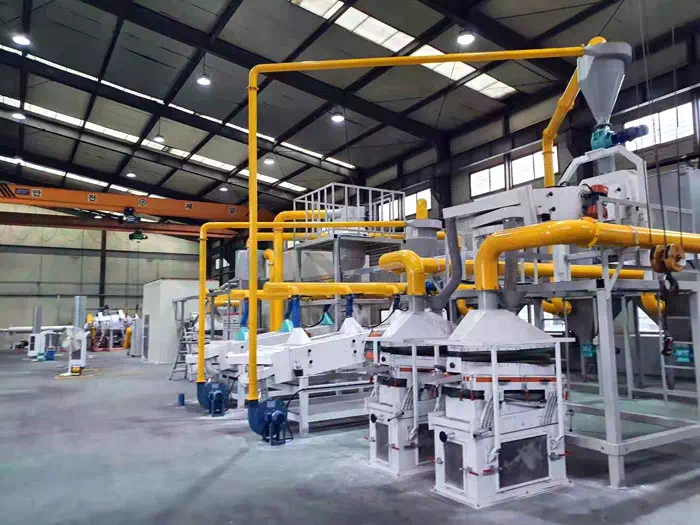
This production line adopts secondary pulverization for the recycling of waste circuit boards to make it a mixture of metal and resin fiber powder; and then separates the metal from the resin through wind and electrostatic sorting. In order to prevent dust pollution during processing, a pulse dust removal device is added after the air separation process, which effectively solves the problem of dust pollution. The equipment has low energy consumption, low noise, high output, no dust and environmental protection. For different materials, you can choose to use different electrostatic separator specifications. The company can produce single-roller, double-roller, four-roller and multi-roller side-by-side electrostatic separators. According to the customer’s requirements for extracting ingredients, purity, and output, electrostatic separators can be customized.

product description
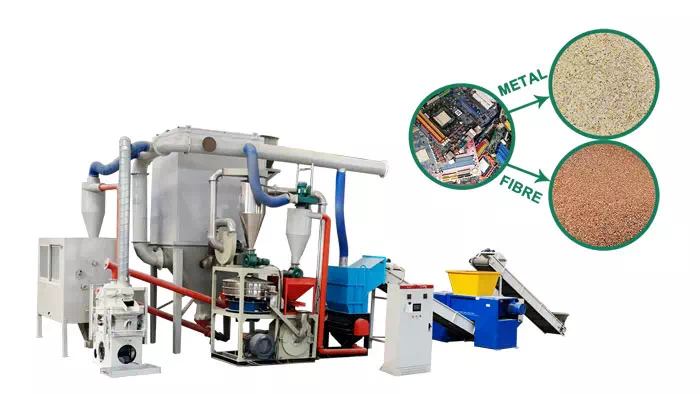
Electronic Waste Recycling Production Line

Electronic Waste Recycling Production Line

1. The waste circuit board crushing and recycling production line is mainly used for the separation of metals and non-metals in materials such as waste circuit boards, copper clad laminates, circuit boards and scraps. Recycling and other circuit board recycling have unique effects. It is also compatible with the recycling of various circuit boards containing capacitors;

2. This production line is an upgraded product of A-type products. On the basis of A-type products, the power consumption is reduced, there is no noise, less labor, high automation procedures, high efficiency, and a smaller footprint. Ideal production line. Welcome everyone to visit our company, and at the same time, I strongly recommend all friends to use the circuit board recycling equipment produced by our company;

3. The successful development of this machine not only improves the quality of recycled copper, but also prevents secondary pollution. This production line adopts secondary pulverization for the recycling of waste circuit boards to make it into a mixture of metal and resin fiber powder; then the process route of separating metal and resin by wind and electrostatic sorting;

4. The overall performance is good, and it has a unique effect on the recycling of computer boards, computer boards, TV boards and other circuit control boards. It is also compatible with the recycling of various circuit boards containing capacitors;

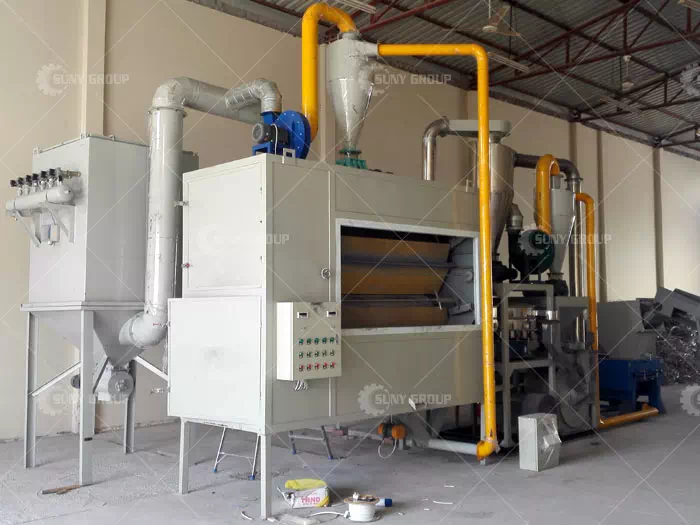
5. The whole set of equipment adopts a new type of dust collector, and the three-in-one dust removal (cyclone dust removal + electrostatic dust removal + static dust removal) has no pollution to the air and no exhaust gas emissions;

6. In order to prevent dust pollution during processing, a pulse dust removal device is added after the air separation process, which effectively solves the problem of dust pollution;

7. The appearance of the equipment is clean and tidy, and there is no dust bag, which replaces the problems that dust and odor cannot be solved by traditional dust collectors.

Equipment advantages:

1. Since tens of thousands of volts of high voltage are generated inside the equipment during operation, special attention should be paid to personal safety during operation. Even if the machine stops working, there are still high voltage charges inside the equipment, which will bring danger to the staff when they are not careful during operation. Therefore, our company specially designed the automatic discharge function for this situation to provide reliable safety guarantee for the operation of the operator.

2. When the equipment is running for a period of time, a large amount of dust will be generated inside, which will directly affect the sorting effect. Our company specially designed an intermittent dust blowing device for this purpose, so that the equipment can always maintain the ideal sorting effect.

3. The electrostatic sorting machine uses a stable high-voltage electrostatic power supply. Due to the influence of weather and humidity or the peak time of electricity consumption, the voltage will change. The instability of the high-voltage power supply will affect the sorting quality. The company specially designed automatic The voltage regulating device makes the high voltage power supply stable.

4. According to the different materials, the electrostatic sorting equipment adopts a unique feeding method, or adopts a separate frequency conversion speed control to control the feeding, so that the materials can enter the corona electric field uniformly, and the ideal sorting effect of the materials can be achieved.

5. Ancillary products: pulverizers, fine crushers, feeders, conveyors, dust removal systems, storage bins, grading screens and other products with a high degree of automation. Different materials, choose different decomposition and separation devices.

6. The electrostatic sorting equipment is easy to maintain, easy to operate and easy to use. The speed adjustment and feeding adjustment are all controlled by frequency conversion, and the national standard motor is matched, which is easy to operate and easy to maintain.

Categories
Case

Cable wire recycling machine Japanese customer work site

Cable wire recycling machine Japanese customer work site

Cable wire recycling machine Japanese customer work site

Categories
News

Suny Group waste lithium-ion battery recycling technology

With the rapid development of the new energy industry, the use of lithium-ion batteries has ushered in an explosive growth. Since the service life of lithium batteries is generally 3 to 5 years, it is imperative to recycle waste lithium ion batteries.

The recycling and treatment technology of waste lithium-ion batteries mainly includes three methods: physical separation, biochemical treatment, and chemical treatment. Physical separation includes flotation method and grinding method, which has poor separation effect and low metal recovery rate. Biochemical treatment utilizes microorganisms to catabolize battery materials and selectively leaches specific elements, but it is still immature and has no practical application. Chemical treatment is a widely used recycling treatment method, and many related researches are carried out. It is mainly divided into three categories: fire process, wet process and electrode regeneration.

Lithium-ion battery recycling technology process

Lithium-ion battery recycling technology process

The material is selectively crushed, and then by adjusting the parameters of air selection, the influence of physical factors such as density, shape, particle size, etc. on the material separation and recovery efficiency is explored. Under the action of airflow, the solid particles are sorted according to density, shape and particle size, and the optimal air selection parameters for the particle size of the crushed product of the waste power battery between 0.20 and 22.00 mm are obtained. Copper and aluminum with a particle size of 5.00 to 22.00 mm were selected by air, and the separation rate was as high as 100%.

At present, the treatment technology of waste lithium batteries is becoming more and more mature. The combined use of various process equipment and the direct regeneration of cathode materials will become the development trend of lithium battery treatment in the future, and the composite treatment technology with low energy consumption, less pollution and easy operation will become the main development direction.

With the development of battery research and industrialization, lithium-ion batteries have been popularized in many aspects of modern society, but the accompanying environmental pollution also faces this very serious challenge, and lithium-ion batteries contain a large amount of metal elements. Therefore, from the perspective of sustainable energy development and the environment, turning waste into treasure and recycling has become an effective means.

As a professional manufacturer of solid waste recycling equipment, SUNY GROUP has rich experience in lithium battery recycling and first-class technical equipment. At present, customers have spread all over India, Vietnam, South Korea, Japan, North America and other places. unanimous praise and trust.

Categories
Case

Large-scale copper wire separator machine officially runs in India

Large-scale copper wire separator machine officially runs in India

Large-scale copper wire separator machine officially runs in India

Categories
Case

Dubai Customer Aluminum-Plastic Separator Equipment Work Site

Dubai Customer Aluminum-Plastic Separator Equipment Work Site

Dubai Customer Aluminum-Plastic Separator Equipment Work Site

Categories
Products Single Equipment

PCB Components Dismantling Machine

Automatic electronic components dismantling machine is used to remove the electrical components from the waste PCB.Because the components are with different precious metals and some parts can be sell separately and directly with a better price.And the mother boards after remove the components are easily to crush and separate the copper. It reduces the work of the next step,and make the precious metals can be recovered more.

APPLICATION RAW MATERIAL

Suitable for various waste circuit boards such as waste computer boards, mobile phone boards, household electrical circuit boards, etc

MACHINE FEATURES

1. Full automatic working, save labor, two persons are enough.

2. Tin remove and dismantling components at one step.

3. Automatic temperature controlled by our heating system.

4. Large capacity: 200kg/h,300kg/h,500kg/h.

5. Operating safety and easily.

6. Less damage to the components,keep the precious metals no losing.

7. Mother board and components can be proceed respectively in the next step to improve economic benefits.

8. Friendly to the air environment,all the smoke processing by the waste gas treatment system.

PARAMETERS

Model Power(kw) Weight (kg) Capacity(kg/h) Dimension(m)
ZCJ-200 0.75+1.1+3 350+100 200 1.67*0.97*1.4
ZCJ-300 0.75+2.2+3 500+200 300 1.85*1.2*1.52
ZCJ-500 0.75+3+3 800+300 500 2.1*1.27*1.74
Categories
News

How To Turn Waste Circuit Boards Into Treasures?

Waste circuit board electronic waste is relatively common in our daily life. If it is discarded at will, it will not only waste resources, but also have a great impact on the environment. So what if you turn waste circuit boards into treasures?

In this regard, SUNY GROUP has developed and manufactured a high-efficiency production line for the recycling of waste circuit boards. Through the waste circuit board recycling production line, it can be finally converted into resin powder and metal powder for recycling again.

Environmental protection circuit board recycling equipment refers to the equipment that separates metals and non-metals by crushing, separating and sorting various waste circuit boards, mobile phone motherboards, etc., and then recycling them. Circuit boards contain a variety of metals, most of which are copper, in addition to gold, aluminum, nickel, lead, silicon, etc., among which there are many rare metals. After the circuit board is broken, the metal recovery rate can be as high as 99% or more through the dual separation process of airflow specific gravity separation and electrostatic separation.

The specific process of waste circuit board crushing and recycling is as follows:

1. The circuit board is sent to the shredding and crushing machine by the conveyor, and the circuit board is shredded to 3-5 cm, and then directly falls into the crusher. The crushed particles reach 1-2 cm, and then sent by the feeding screw. Enter the three-stage pulverizer for grinding. The pulverizer is an integrated water-cooled pulverizer. Grinding is carried out under the normal temperature of the machine, and the mesh number reaches 50-80 mesh. The pulverizer comes with a grading and screening machine. In the grinding process, the circuit board powder that reaches the required mesh number enters the next link, and cannot meet the required recirculation.

2. The 50-80 mesh circuit board powder enters the next stage of the air-driven specific gravity separator, and the primary separation is carried out according to the specific gravity of the copper powder and the resin fiber powder, and about 70% of the metal powder can be separated. The powder separated by the specific gravity separator and the upper ventilation The pumped powder enters the pulse dust collector, and the powder discharged from the pulse dust collector contains a small amount of copper powder, which is then sent to the high-voltage electrostatic separation equipment by the wind feeder for the subsequent separation.

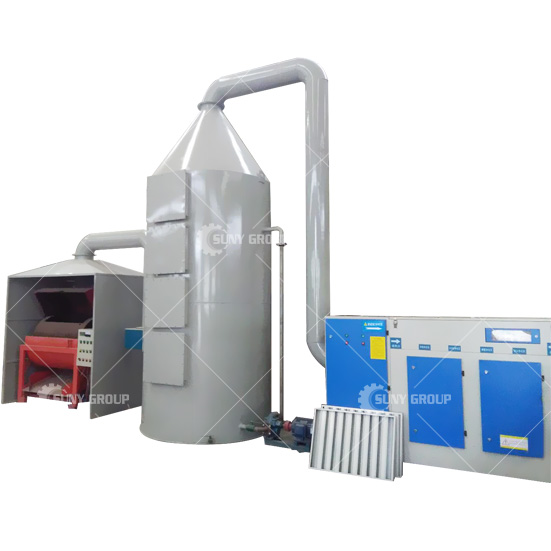
3. Manually place the PCB light board on the belt conveyor and send it to the two-stage crusher for crushing into granules, and then go through three-stage grinding, wind classification, gravity classification, sieving classification and high-voltage electrostatic sorting machine sorting, etc. In the link, the copper and non-metal in the PCB are separated and recycled. The dust and odor generated by the PCB electrical sorting system are collected, dedusted and deodorized and then discharged up to the standard.

The above is the relevant introduction about how waste circuit boards can be turned into treasures. SUNY GROUP, as a professional manufacturer of electronic waste recycling equipment for waste circuit boards, can customize production according to the different needs of customers. At present, customers are located in India, Vietnam, and Japan. , Europe and the United States and other places, if you need, please feel free to contact us for consultation.