



18650 Lithium Battery Recycling Machine
The 18650 battery recycling production line utilises processes such as crushing, pyrolysis, and sorting to effectively separate materials such as black powder, steel casings, copper, and aluminium. This not only reduces the risks associated with the treatment of waste batteries but also improves the recovery rate of valuable metal resources.
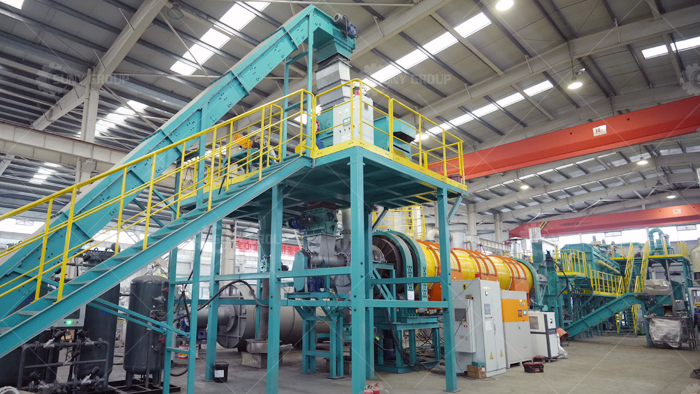
18650 Lithium Battery Recycling Machine
Crushing and Pyrolysis System: Enabling Safe Pre-treatment of Batteries
The internal structure of 18650 lithium-ion batteries with iron casings is complex, comprising the iron casing, electrolyte, separator, copper foil, aluminium foil, and active materials for the positive and negative electrodes. Before entering the sorting process, safe pre-treatment is required.
The production line first utilises specialised crushing equipment to reduce the volume of waste batteries. A low-speed, high-torque design is employed to minimise safety risks during the crushing process. The crushed material is fed into the pyrolysis system, where the electrolyte, organic binders, and separator materials are treated under controlled temperature conditions. The pyrolysis process not only reduces the difficulty of subsequent sorting but also helps to improve the purity of the black powder.
Following pyrolysis, the bonding strength between the internal active materials and the metal components of the battery is significantly reduced, creating the conditions for efficient separation in subsequent stages.
Multi-stage Sorting System: Obtaining High-Purity Recycled Products
The pyrolysed material proceeds to the multi-stage sorting phase. Based on the physical properties of different materials, the production line employs processes such as magnetic separation, air classification, and fine screening for classification and recovery.
Iron casing material is prioritised for recovery via the magnetic separation system, yielding pure iron; copper and aluminium foils are separated utilising differences in density and electrical conductivity; and the positive and negative electrode powders are collected to form a high-value black powder product.
With appropriate process configuration, the production line can effectively separate black powder, iron casings, copper, and aluminium. The black powder contains important metallic elements such as lithium, nickel, cobalt, and manganese, serving as a key raw material source for subsequent hydrometallurgical extraction. High-purity metal products can be directly fed into downstream recycling processes, thereby enhancing the overall value of resource recovery.
Compared to traditional, crude processing methods, this equipment integrates crushing, pyrolysis, and sorting through a continuous process, reducing manual intervention and improving operational stability. It is also equipped with dust removal and exhaust gas treatment systems, meeting the environmental protection and resource recovery requirements of the modern battery recycling industry.
If you have any requirement or suggestion, please fill in the form and send to us, thanks!E-mail:[email protected] | Whatsapp:+8613674945231
INQUIRY