• SUNY Fackbook
  • SUNY Linkedin
  • SUNY Youtube
Categories
News

PV Module Disassembly Crushing and Sorting Line

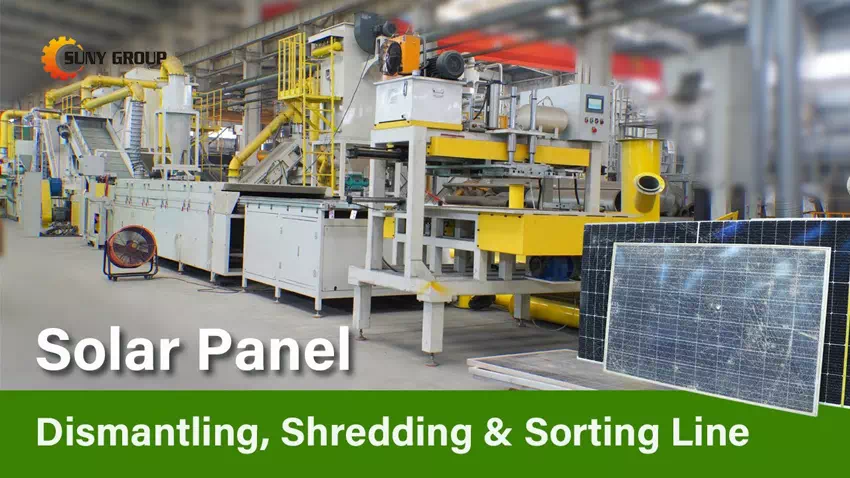
This PV module disassembly, crushing and sorting line utilises a combination of physical and thermal processes to efficiently separate the aluminium frames, junction boxes and high-purity glass from solar panels, whilst precisely sorting out metals such as copper and silicon powder. It is a key piece of equipment for achieving the recycling of PV materials.

Automated Front-End Disassembly: Efficient Stripping of Frames and Glass

The primary stage in PV module recycling is the complete separation of the outer casing from the encapsulation materials. The semi-automatic frame and junction box disassembly machine included in this solution enables a ‘one-step’ process for simultaneously removing the aluminium frame and junction box. As it utilises manual loading, the equipment offers exceptional operational flexibility for solar panels within a specific size range.

The subsequent heated adhesive removal and glass peeling machine is central to enhancing material purity. It utilises precise temperature control technology to weaken the adhesive properties of the EVA layer, enabling the tempered glass to peel off in uniform, granular chunks. This not only significantly improves the recovery rate of glass but also prevents glass debris from contaminating the subsequent cell stream, thereby ensuring the recycling value of the downstream materials.

Refined Mid-to-Late Stage Sorting: Pure Extraction of Non-ferrous Metals and Silicon Powder

After the protective layer has been removed, the solar cells enter the cell crushing and sorting line for in-depth resource recovery. The system refines the material through multi-stage crushing and employs a combination of physical processes such as air-classification and electrostatic separation.

The key technology of this production line lies in its precision separation capabilities, enabling the high-purity enrichment of valuable non-ferrous metals—such as copper and aluminium powders—from non-metallic resins and mixed silicon powder. This multi-stage sorting process circumvents the environmental pressures associated with chemical methods, ensuring the recovery efficiency of core precious metals like copper through a low-energy, high-output physical sorting model.

It not only achieves a closed-loop recycling process for photovoltaic modules—from dismantling the casings to extracting the internal metals—but also facilitates industrial-scale PV processing that balances economic benefits with environmental standards.
Categories
News

Dual Shaft Shredder and Magnetic Separator for Scrap Metal Recycling

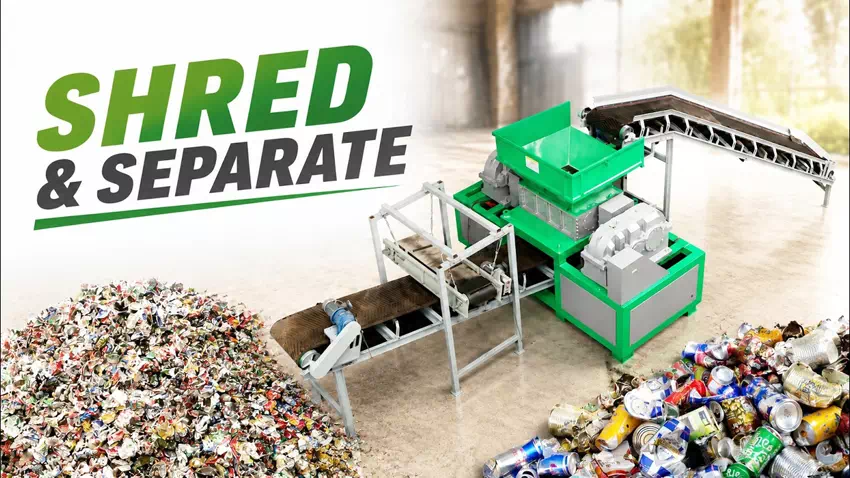
In the fields of scrap metal recycling, UBC (used aluminium beverage cans) processing, and mixed waste sorting, an integrated system comprising a twin-shaft shredder and a belt-type magnetic separator enables continuous material shredding and metal separation. This effectively increases metal recovery rates, reduces manual sorting costs, and enhances overall processing efficiency.

Dual-shaft shredders ensure uniform shredding, improving subsequent sorting results.

One of the core components of this system is the dual-shaft shredder. Featuring a low-speed, high-torque design, the equipment utilises two sets of counter-rotating cutter shafts to shear, tear, and shred materials. It is capable of processing a wide range of materials, including used beverage cans, scrap metal packaging, wooden pallets, and mixed plastic and metal waste.

Compared to traditional single-stage shredding equipment, the twin-shaft shredder is capable of reducing large-sized materials into particles of a relatively uniform size, thereby creating stable feed conditions for subsequent magnetic separation. Uniform particle size not only helps improve the precision of metal separation but also reduces the risk of blockages during the conveying and screening stages.

Belt-type magnetic separator for automatic separation of ferrous metals

After shredding, the material enters the conveying system directly and undergoes metal separation via a belt-type magnetic separator. The equipment is fitted with a high-strength permanent magnet drum that continuously attracts ferrous materials, enabling the automatic separation of ferrous metals from non-ferrous metals, plastics, wood, and other materials.

In actual production, the magnetic separator continuously recovers steel materials, reducing the workload of manual sorting and improving processing efficiency. For projects involving the recycling of wooden pallets containing nails, the magnetic separator effectively removes iron nails from the wood; in the processing of mixed waste, it rapidly extracts magnetic metals such as scrap steel and iron sheets.

Suitable for a wide range of waste resource recovery scenarios

The combination of a twin-shaft shredder and a belt-type magnetic separator offers strong adaptability and can be widely applied in fields such as the recycling of used beverage cans, the processing of metal packaging, the recycling of wooden pallets, the processing of automotive dismantling waste, and the resource recovery of industrial solid waste.

From a resource recovery perspective, the system achieves rapid recovery of ferrous metals through the coordinated operation of front-end shredding and back-end magnetic separation, thereby improving the utilisation rate of reusable resources. At the same time, the continuous production model reduces downtime, making it suitable for large-scale operations by medium to large recycling enterprises.

If you would like further information, please feel free to contact us at any time to request a quote or view a video.

Categories
News

Glass Cullet Crusher with Pulverizer System

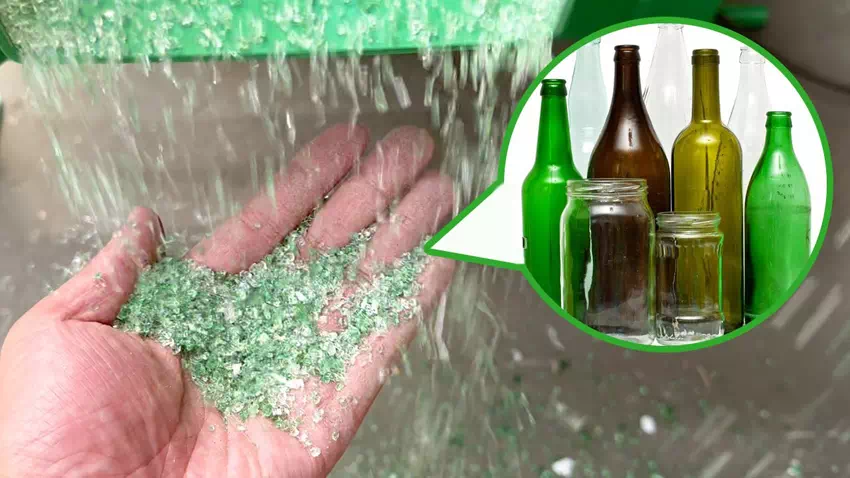
The Glass Cullet Crusher with Pulveriser System processes waste glass bottles and containers through crushing, grading, and pulverisation, transforming them into glass particles of various specifications. This provides a stable source of raw materials for glass remanufacturing, the production of building materials, and the recovery of industrial raw materials.

High-Efficiency Crushing and Three-Stage Screening System

This glass crushing and pulverising equipment employs a design that combines crushing with three-stage screening. Waste glass first enters the crushing unit for preliminary processing, after which the screening system automatically separates the material into three different particle size grades. Compared to traditional single-stage crushing equipment, the graded material can proceed directly to subsequent processes, eliminating the need for secondary screening and thereby improving overall production efficiency.

In actual production, glass cullet with a uniform particle size not only improves the quality of subsequent processing but also reduces energy consumption during the melting process. Industry data indicates that, in glass recycling, the use of qualified glass cullet can effectively reduce raw material pre-treatment costs and enhance furnace production stability.

Compact Structure and Stable Processing Capacity

Despite its compact overall structure, the equipment has a processing capacity of approximately 1 tonne of waste glass bottles per hour. This means that under conditions of continuous 8-hour daily operation, a single unit can theoretically process approximately 8 tonnes of waste glass raw material, meeting the production requirements of most regional glass recycling centres and resource recovery enterprises.

The equipment’s key components feature wear-resistant designs, enabling it to cope with the high hardness and abrasive nature of glass materials. Furthermore, the crushing system can process the glass into finer particles or powder, opening up additional application possibilities in fields such as glass ceramics, building materials, and industrial fillers.

Essential Equipment for Enhancing Resource Utilisation

The value of the glass cullet crushing and grinding system lies not only in reducing material volume and facilitating transport, but more importantly in enabling the standardised processing of waste glass. Through stable particle size control and continuous production, this equipment enhances the efficiency of subsequent recycling and reuse, whilst reducing the need for manual sorting and repetitive processing stages.

For glass recycling enterprises, a system that combines crushing, grading, and pulverising functions not only boosts production efficiency but also creates a more stable raw material base for subsequent deep processing, thereby achieving a dual improvement in resource recovery and economic benefits.

Categories
News

E-Waste Recycling Machinery and Complete Plant Solution

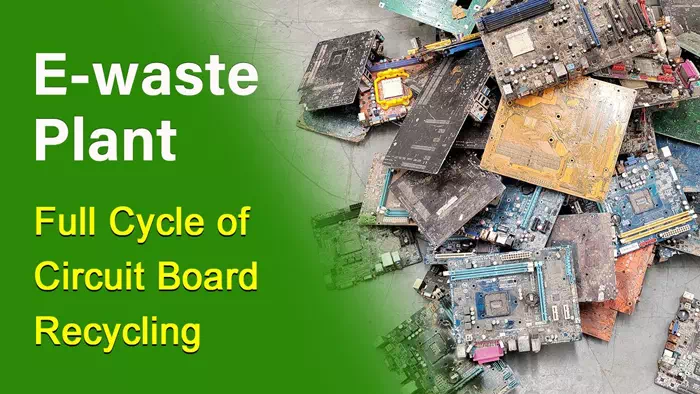
The core function of electronic waste recycling equipment is to effectively separate and recover valuable metals such as copper, gold, and silver from waste PCB circuit boards, while reducing the environmental impact of hazardous substances. Through reasonable equipment combinations and process design, resource utilization can be significantly improved and labor costs reduced.

PCB Pre-processing Equipment: A Crucial Link in Improving Subsequent Recycling Efficiency

Electronic waste recycling typically begins with the dismantling of PCB components. Waste circuit boards often contain a large number of electronic components such as capacitors, resistors, chips, interfaces, and connectors, which typically account for 20% to 40% of the total weight of the circuit board.

PCB component dismantling machines use a combination of heating and mechanical vibration to quickly detach components soldered onto the circuit board. Compared to manual dismantling, this equipment can operate continuously, significantly improving processing efficiency while avoiding metal loss due to forceful dismantling.

After component removal, the copper foil layer and substrate structure in the circuit board can enter the subsequent crushing process more evenly, improving not only the stability of equipment operation but also the accuracy of subsequent metal sorting. The dismantled electronic components can be further classified and recycled according to type, increasing the overall economic value.

PCB Crushing and Sorting Production Line: Achieving Efficient Separation of Copper and Non-metallic Materials

Pre-treated circuit boards enter the PCB crushing and sorting system. This production line typically consists of a shredder, hammer mill, grinding equipment, air classifier, electrostatic separator, and dust removal system.

The equipment first progressively crushes the circuit boards to millimeter-sized particles, then separates them based on differences in density, conductivity, and aerodynamic properties. After multi-stage sorting, the copper recovery rate can typically reach over 95%, with some optimized processes even approaching 98%.

The copper content in waste circuit boards is generally between 15% and 30%, far exceeding the average copper grade of less than 1% in natural copper ore. Therefore, from a resource utilization perspective, PCBs are referred to in the industry as “urban mines.” Mechanical and physical sorting technology not only reduces chemical processing steps but also lowers wastewater and exhaust emissions, aligning with the modern trend of environmentally friendly recycling.

Precious Metal Extraction Systems: Enhancing the Recycling Value of Electronic Waste

For high-value materials such as circuit boards, CPUs, gold fingers, and electronic connectors, simply recycling copper and basic metals often fails to fully realize their economic value.

Precious metal extraction systems are primarily used to recover precious metal resources such as gold, silver, and palladium. After gold layer removal, precious metal enrichment, and refining processes, the overall recycling revenue can be further increased. For example, the gold content of some server circuit boards and communication equipment circuit boards is often much higher than that of ordinary consumer electronics products; therefore, precious metal recycling has become an important source of profit for many electronic waste processing companies.

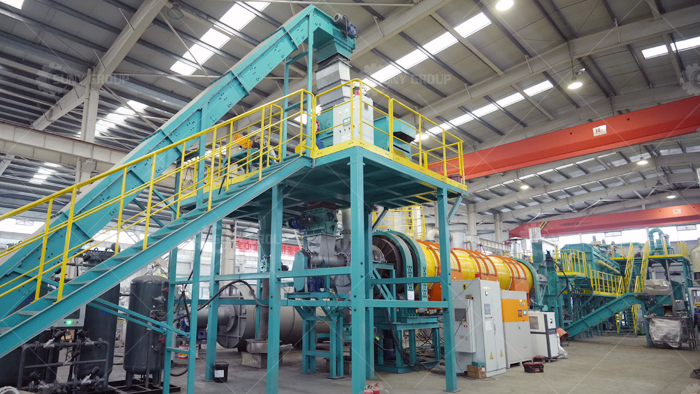
A complete electronic waste recycling plant typically integrates PCB dismantling equipment, crushing and sorting equipment, and precious metal extraction systems to achieve continuous production from waste circuit boards to metal resource recovery. Compared to single-equipment processing models, the complete plant solution reduces material handling steps, increases automation, and effectively controls operating costs.

Categories
News

18650 Lithium Battery Recycling Machine

The 18650 battery recycling production line utilises processes such as crushing, pyrolysis, and sorting to effectively separate materials such as black powder, steel casings, copper, and aluminium. This not only reduces the risks associated with the treatment of waste batteries but also improves the recovery rate of valuable metal resources.

18650 Lithium Battery Recycling Machine

18650 Lithium Battery Recycling Machine

Crushing and Pyrolysis System: Enabling Safe Pre-treatment of Batteries

The internal structure of 18650 lithium-ion batteries with iron casings is complex, comprising the iron casing, electrolyte, separator, copper foil, aluminium foil, and active materials for the positive and negative electrodes. Before entering the sorting process, safe pre-treatment is required.

The production line first utilises specialised crushing equipment to reduce the volume of waste batteries. A low-speed, high-torque design is employed to minimise safety risks during the crushing process. The crushed material is fed into the pyrolysis system, where the electrolyte, organic binders, and separator materials are treated under controlled temperature conditions. The pyrolysis process not only reduces the difficulty of subsequent sorting but also helps to improve the purity of the black powder.

Following pyrolysis, the bonding strength between the internal active materials and the metal components of the battery is significantly reduced, creating the conditions for efficient separation in subsequent stages.

Multi-stage Sorting System: Obtaining High-Purity Recycled Products

The pyrolysed material proceeds to the multi-stage sorting phase. Based on the physical properties of different materials, the production line employs processes such as magnetic separation, air classification, and fine screening for classification and recovery.

Iron casing material is prioritised for recovery via the magnetic separation system, yielding pure iron; copper and aluminium foils are separated utilising differences in density and electrical conductivity; and the positive and negative electrode powders are collected to form a high-value black powder product.

With appropriate process configuration, the production line can effectively separate black powder, iron casings, copper, and aluminium. The black powder contains important metallic elements such as lithium, nickel, cobalt, and manganese, serving as a key raw material source for subsequent hydrometallurgical extraction. High-purity metal products can be directly fed into downstream recycling processes, thereby enhancing the overall value of resource recovery.

Compared to traditional, crude processing methods, this equipment integrates crushing, pyrolysis, and sorting through a continuous process, reducing manual intervention and improving operational stability. It is also equipped with dust removal and exhaust gas treatment systems, meeting the environmental protection and resource recovery requirements of the modern battery recycling industry.

Categories
News

Dual-Shaft Shredder for Engine Shredding

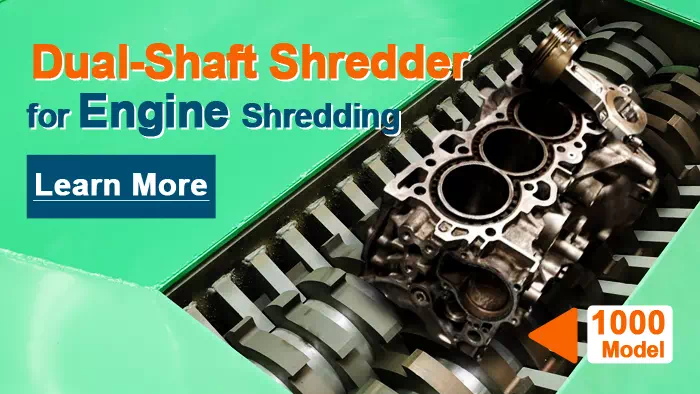
The twin-shaft engine aluminium alloy shredder is an industrial machine specifically designed to process scrap aluminium alloy engine castings. Utilising a high-torque, low-speed twin-shaft cutting mechanism, it efficiently shreds large aluminium alloy blocks, providing a front-end processing solution for metal recycling and reprocessing. This equipment is suitable for end-of-life vehicle recycling, aluminium alloy profile recycling and industrial waste processing, and is capable of enhancing metal separation efficiency and resource utilisation.

Dual-Shaft Shredder for Engine Shredding

Dual-Shaft Shredder for Engine Shredding

Equipment Performance and Technical Specifications

This series of twin-shaft shredders comprises four models to accommodate varying production capacity requirements. Specific parameters are as follows: the ZY-SS 800 model has a processing capacity of 1,000–1,500 kg per hour, equipped with a 222 kW twin motor, 18 blades, and a blade diameter of 400 mm; the ZY-SS 1000 model has a capacity of 1,500–2,000 kg per hour, with a motor power of 302 kW, 22 blades; the ZY-SS 1200 model can process 2,000–3,000 kg/h, equipped with a 452 kW motor and 28 blades; the ZY-SS 1500 model has the highest capacity at 2,500–3,500 kg/h, with a dual-motor power of 552 kW and 34 blades. All models feature blades of the same dimensions, Φ400 × 40 mm, whilst the feed hopper dimensions vary by model, ranging from 800 × 1200 mm to 1500 × 2000 mm. These specifications ensure the equipment can reliably crush aluminium alloy blocks of varying sizes and hardness, whilst minimising the risk of entanglement and blockages.

Application Advantages and Operational Insights

The dual-shaft design enables the blades to rotate in opposite directions, achieving uniform crushing through shearing, compression and impact. Compared to traditional high-speed shredders, this equipment’s low-speed, high-torque operation not only reduces energy consumption but also extends blade life. In practice, the ZY-SS 1200 and larger models can operate continuously with stable output, making them suitable for medium to large-scale recycling enterprises. Appropriate model selection should be based on material characteristics and production requirements; for instance, the ZY-SS 1500 is recommended for large volumes of automotive engine blocks to ensure efficiency. The equipment can be integrated with downstream sorting processes such as magnetic separation, air classification and vibrating screens to achieve high-purity aluminium scrap recovery and enhance resource utilisation.

If you would like further details, please feel free to contact us at any time to request a video demonstration or a quotation.