• SUNY Fackbook
  • SUNY Linkedin
  • SUNY Youtube
Categories
Products Shredder Equipment

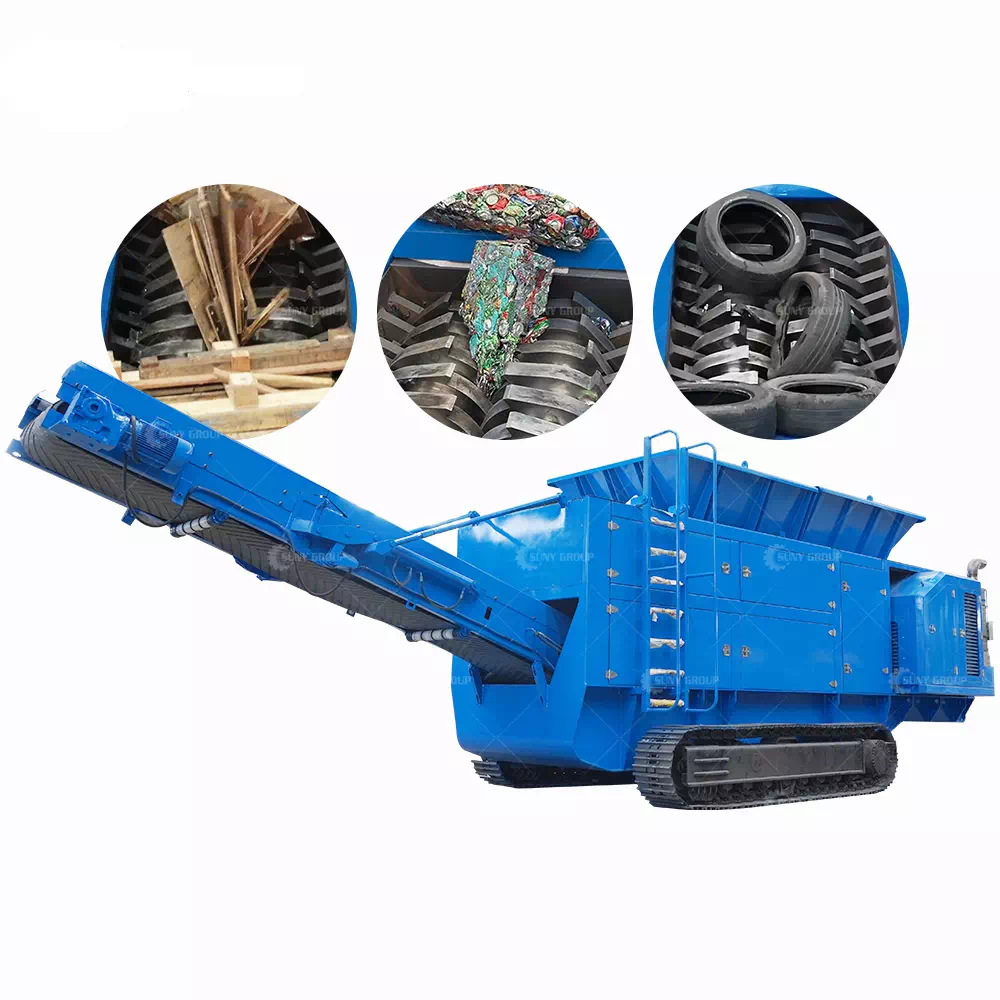
Mobile Dual Shaft Shredder Machine

BACKGROUND AND PAIN POINTS ADDRESSED

With increasingly stringent global resource recycling and environmental regulations, traditional stationary crushing equipment faces challenges such as high transportation costs and low efficiency when dealing with large quantities of dispersed and complex materials on-site. SUNY GROUP’s mobile tracked industrial shredder integrates feeding, crushing, conveying, and power systems into a single unit. Thanks to its superior mobility, it brings the crushing operation directly to the material site, greatly simplifying the processing workflow and becoming a significant innovation in the field of solid waste resource utilization.

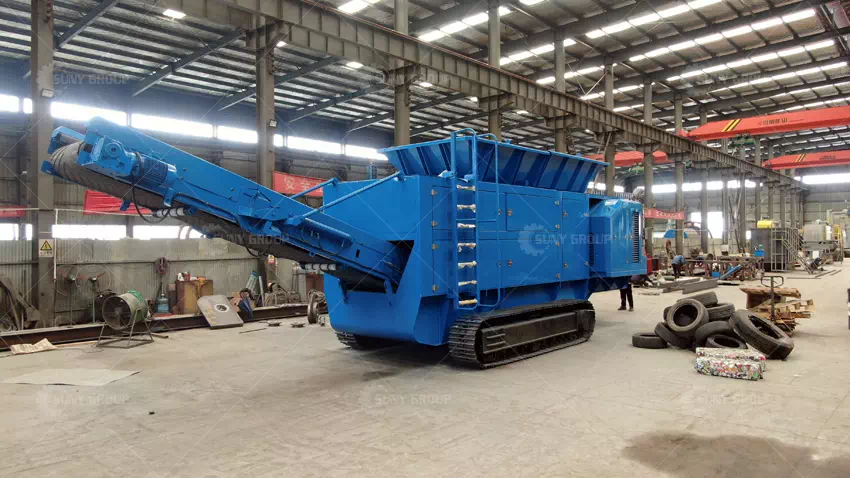
This equipment features a heavy-duty crawler chassis with a large slope design, providing robust obstacle-crossing and climbing capabilities, with a maximum travel speed of 1km/h. The shredding main unit is equipped with alloy cutting tools that have an outer diameter of 600mm, ensuring superior cutting efficiency. The main power transmission system utilizes a hydraulic transmission mode and incorporates pressure detection and protection functions to guarantee safe and stable operation. Additionally, an optional suspended magnetic separator is available to effectively remove ferrous impurities from the raw materials, enhancing material purity and increasing durability. The machine supports both remote controller and manual operation, and comes with a remote diagnosis function for easy maintenance.

APPLICABLE MATERIALS

Raw Materials and Finished Products

The Mobile Dual Shaft Shredder Machine is engineered to process a vast and complex range of solid waste for volume reduction, pre-treatment, and resource recovery.

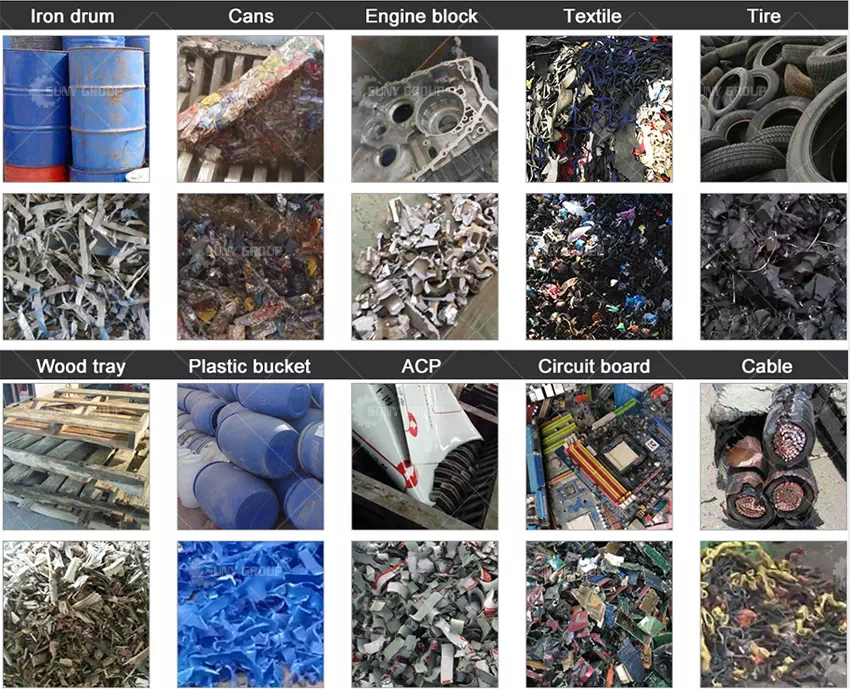
Applicable Materials: Car bodies, tires, engine blocks, scrap furniture, iron drums, radiators, textiles, clothes, plastic pallets, wood trays, waste cables, plastic film, circuit boards, spring mattresses, and other industrial scraps.

Output: The shearing action results in uniformly sized, higher-density shredded materials, which are easier to handle for subsequent recycling, incineration, or landfilling, thus maximizing the economic value and processing efficiency of the waste.

STRUCTURE AND WORKING PRINCIPLE

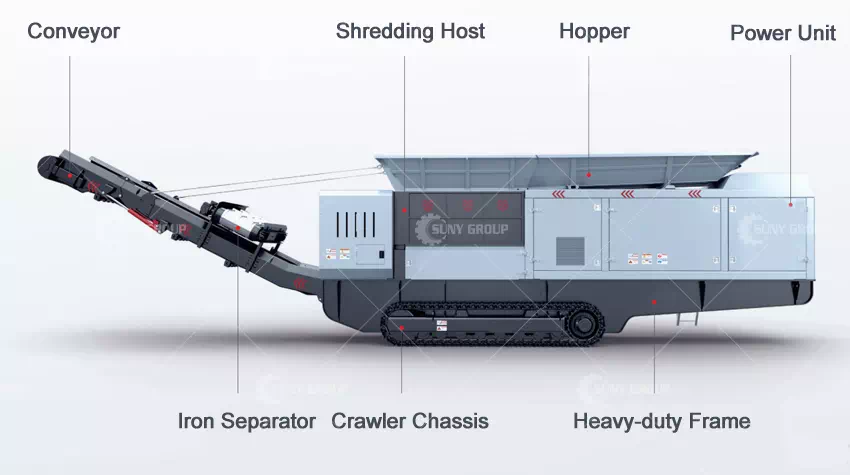
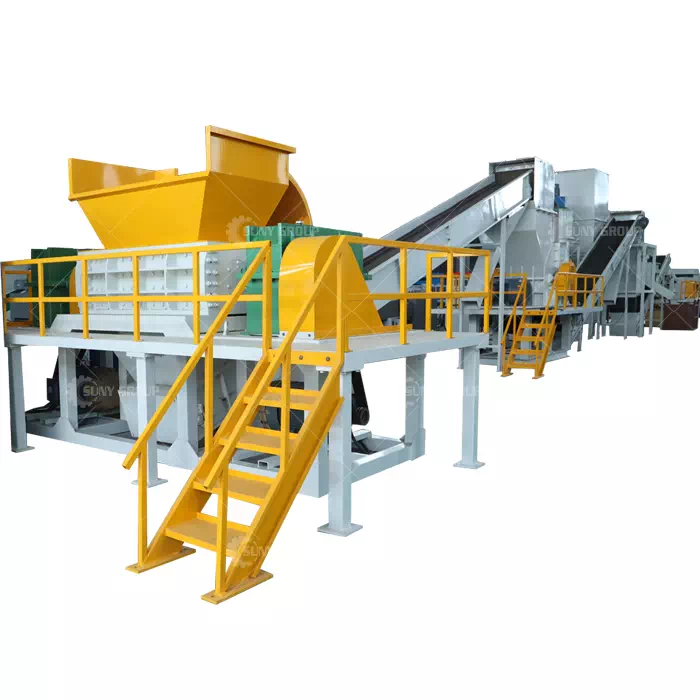
The main structure includes the Hopper , Shredding Host (with wear-resistant alloy tools), Crawler Chassis (heavy-duty design), Foldable Conveyor (high stacking height and strong conveying capacity), Dedicated Power Unit, Hydraulic Transmission System, and PLC Control System. Customization for Planetary Reducers is also supported.

Mobile Shredder Structure Diagram

Raw material is fed into the shredding host via the hopper, where the hydraulically driven dual-shafts perform low-speed, high-torque shearing and tearing actions. This dual-shaft shearing working principle is highly effective for processing large, tough, and easily-tangled materials. The shredded material is then discharged by the foldable conveyor. The entire process is precisely controlled by the PLC system, which uses pressure detection systems to monitor the load on transmission parts in real-time. Safety protection functions are instantly activated upon overload, ensuring the equipment’s operational safety.

MACHINE ADVANTAGES

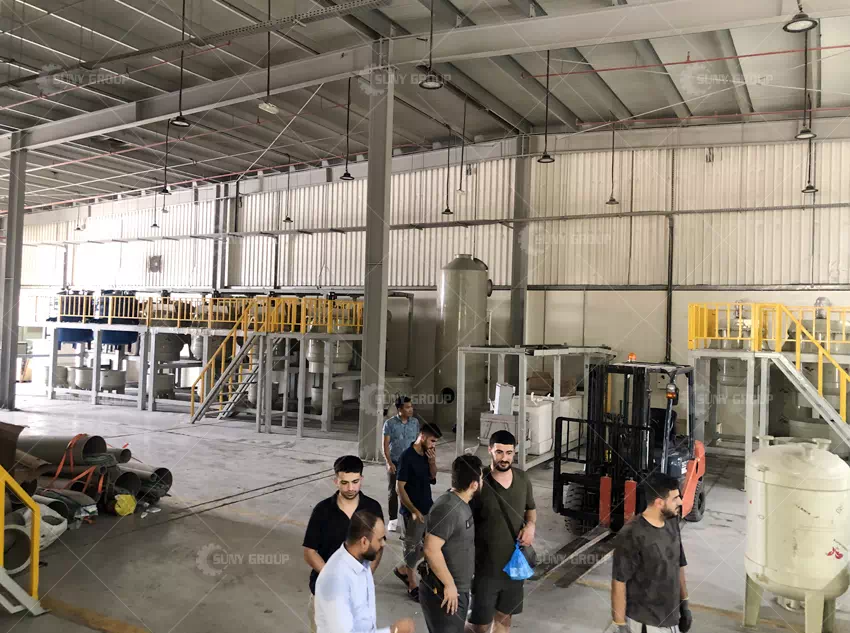
Mobile Shredder Manufacturing Workshop

1. Superior Mobility (Mobile Dual Shaft Shredder Machine): Heavy-duty tracked chassis allows for on-site shredding operations without complex infrastructure.

2. High Reliability and Safety: Hydraulic transmission system with built-in protection features; pressure detection systems ensure safe and stable operation.

3. Efficient Shredding Performance: Equipped with wear-resistant alloy tools and a dual-shaft shearing design for high cutting efficiency and relatively low energy consumption.

4. Integrated Design: Integrates feeding, shredding, power, and conveying, offering high integration and flexible site transfers.

5. Remote Intelligent Control: Supports remote and manual operation, complete with remote diagnosis for convenient operation and maintenance.

Categories
News

Professional PCB Electronic Waste Recycling Solutions

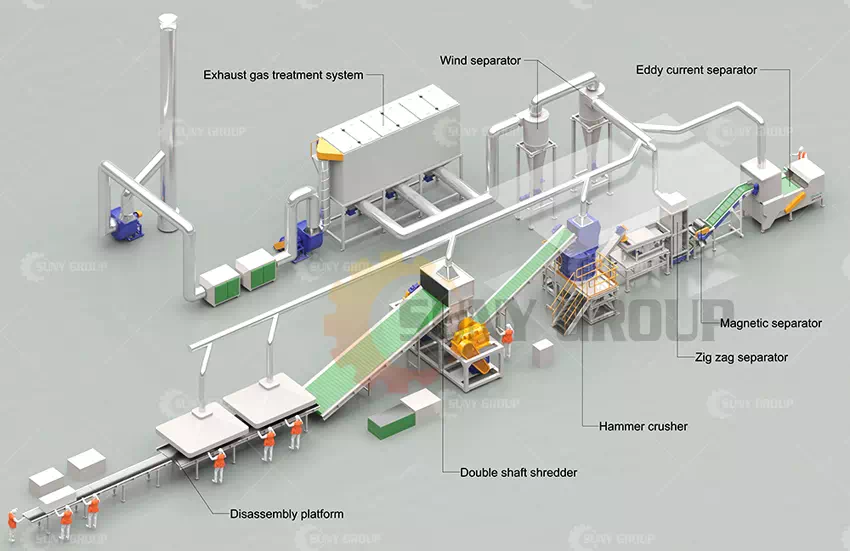
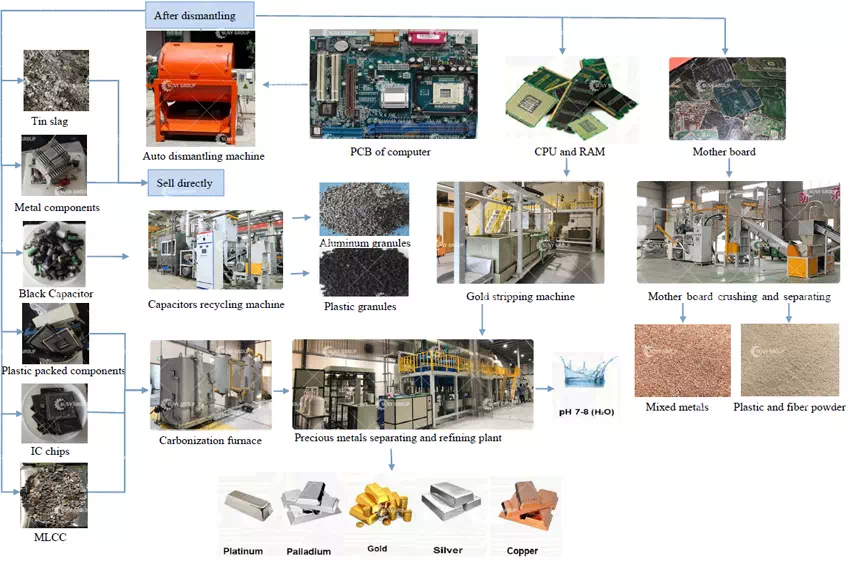
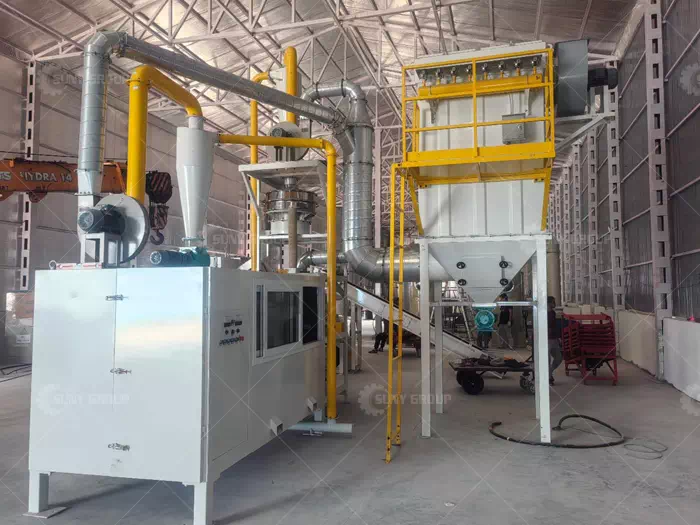
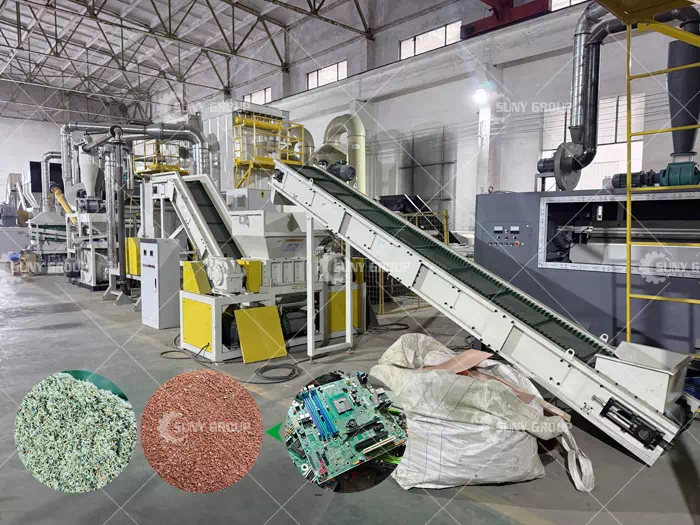
In electronic waste recycling, printed circuit board (PCB) recycling typically begins with physical processing of the motherboards. A complete motherboard crushing and sorting system consists of a crusher, magnetic separator, air classifier, and dust removal system. The equipment crushes waste PCB motherboards into uniform particles, and then uses multi-stage sorting technology to completely separate metals from non-metals. The metal portion is mainly copper, which can be directly used for smelting and recycling; the non-metal portion is mainly resin fiber powder, which can be used to prepare building materials or fillers. The entire process is fully enclosed, requiring no chemical additives, ensuring environmental friendliness, cleanliness, and safety, making it the core equipment for processing large volumes of PCBs.

Precious Metal Extraction System

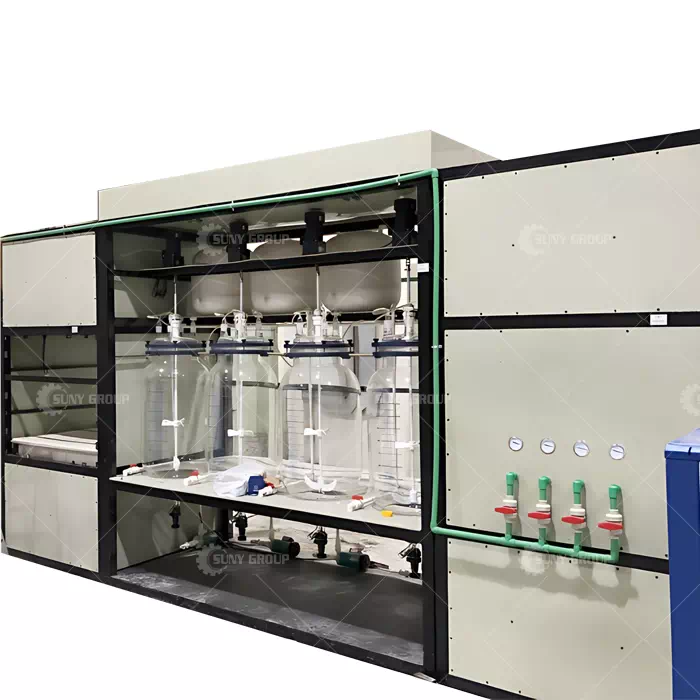
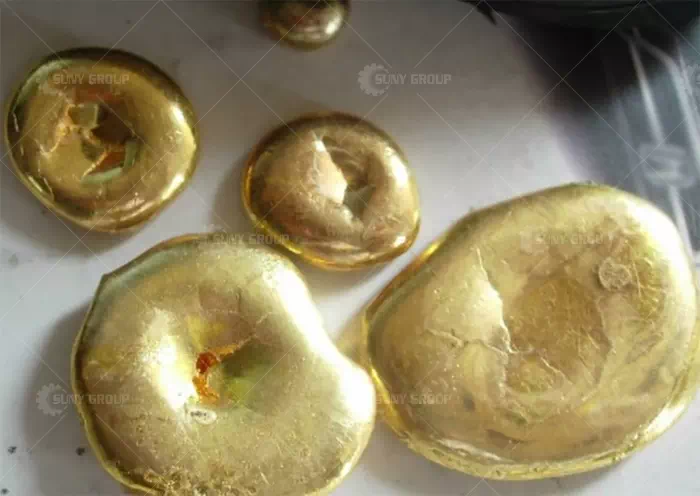
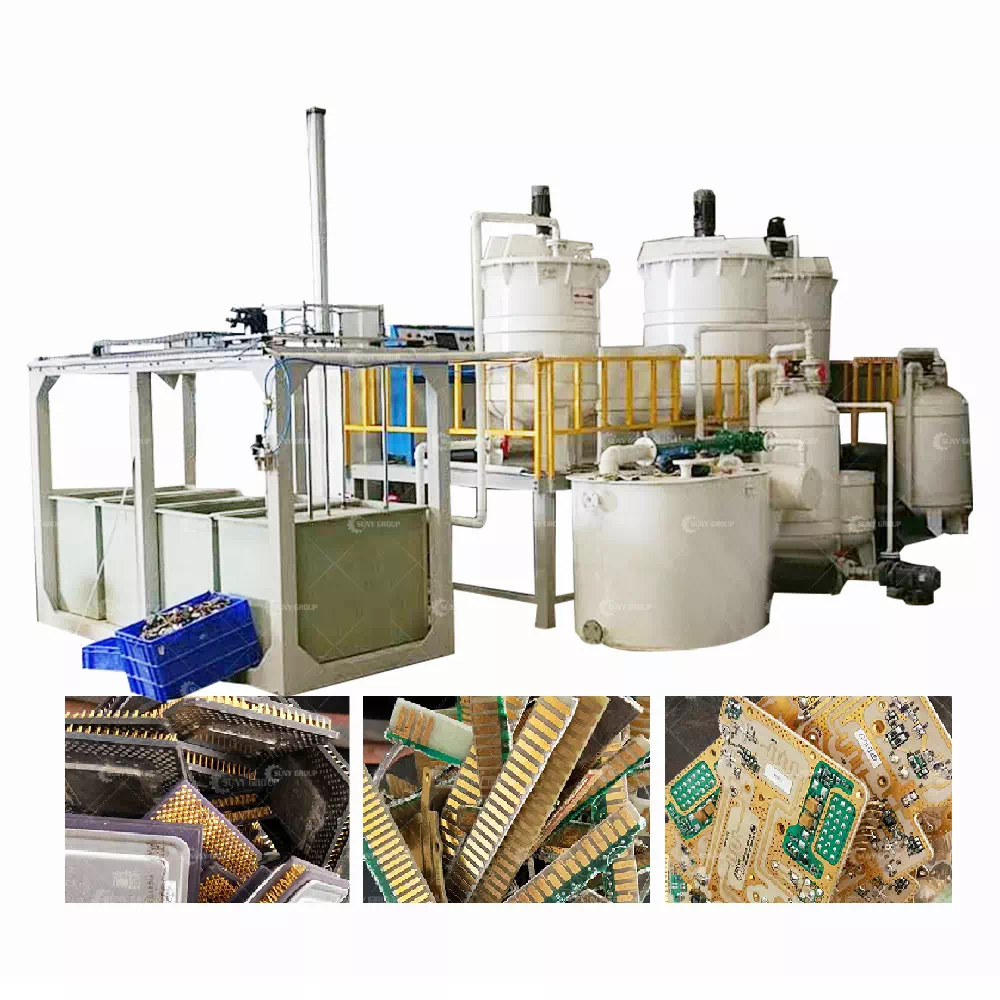
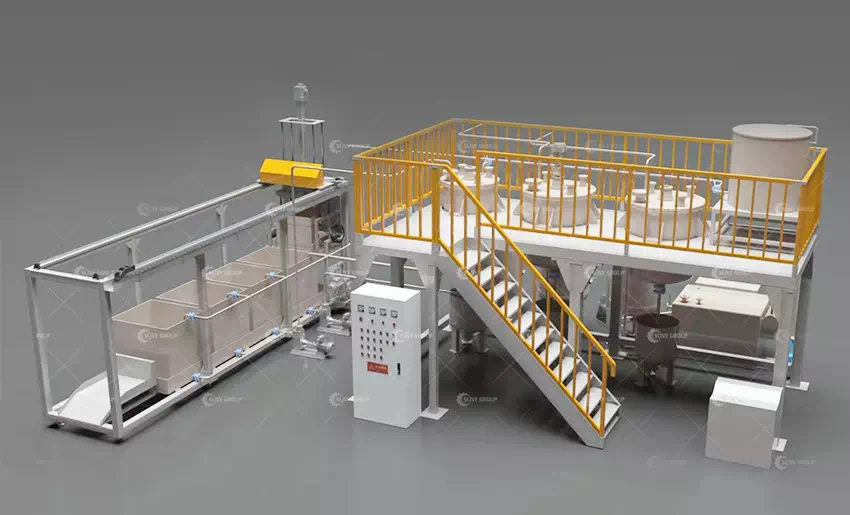
In addition to basic metals, waste PCBs also contain precious metals such as gold, silver, and palladium, which are the most valuable part of electronic waste. A precious metal extraction system typically comprises a gold recovery unit, a precious metal separation tank, and a refining system. Taking a gold extraction system as an example, a specialized gold stripping device can separate the gold layer from the surface of electronic components under controlled reaction conditions. After filtration, precipitation, and refining, high-purity gold powder or gold ingots are obtained. The entire system boasts high reaction efficiency and low loss, and is equipped with waste gas and wastewater treatment equipment to ensure the production process meets environmental standards.

One-Stop E-Waste Recycling Solution

Combining motherboard crushing and sorting with precious metal extraction means that companies can simultaneously recover multiple resources such as copper, resin powder, gold, and silver, maximizing the utilization of electronic waste. SUNY GROUP’s complete e-waste recycling lines are not only highly automated and easy to operate, but can also be customized to meet the production needs of different countries and companies, providing customers with a sustainable and profitable recycling model.

If you are looking for complete e-waste recycling equipment or would like to learn more about precious metal extraction solutions, please feel free to contact us for more technical information and pricing details.

Categories
Electronic Waste Recycling Plant Products

E Waste Gold Recovery Machine

BACKGROUND AND PAIN POINTS ADDRESSED

With the rapid iteration of electronic products worldwide, the amount of e-waste generated annually has surged. This waste is rich in precious metals such as gold, silver, palladium, and copper, with grades far exceeding those of natural ores, thus earning it the moniker of “urban mines.” However, traditional recycling methods, such as incineration or strong acid leaching, are inefficient and severely pollute the environment. Developing efficient, environmentally friendly, and precise recycling technologies is crucial to meeting the demands of sustainable development and the circular economy.

Our E Waste Gold Recovery Machine is a specialized device for recovering precious metals from gold-plated materials in electronic waste. Its core advantages lie in its high efficiency and selective stripping, capable of dissolving the gold plating layer within seconds to minutes, achieving rapid gold recovery.

APPLICABLE MATERIALS

This gold stripping system is primarily suitable for various waste electronic materials containing gold or silver plating, including:

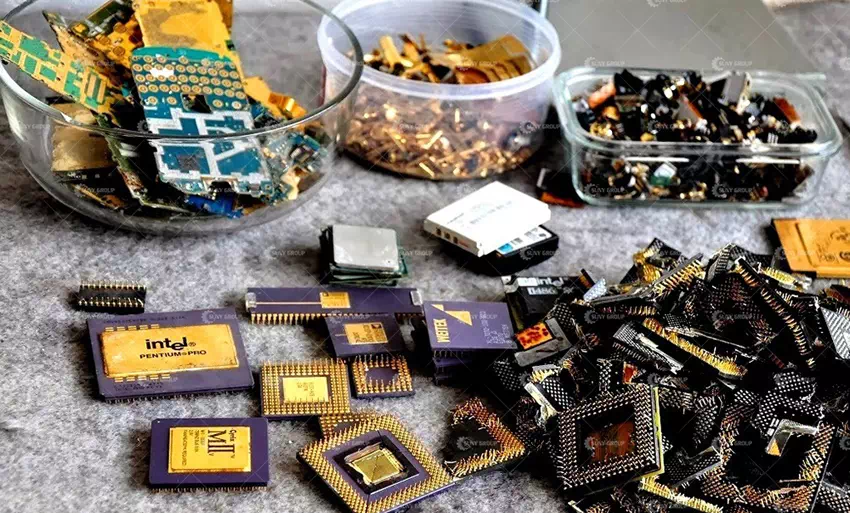
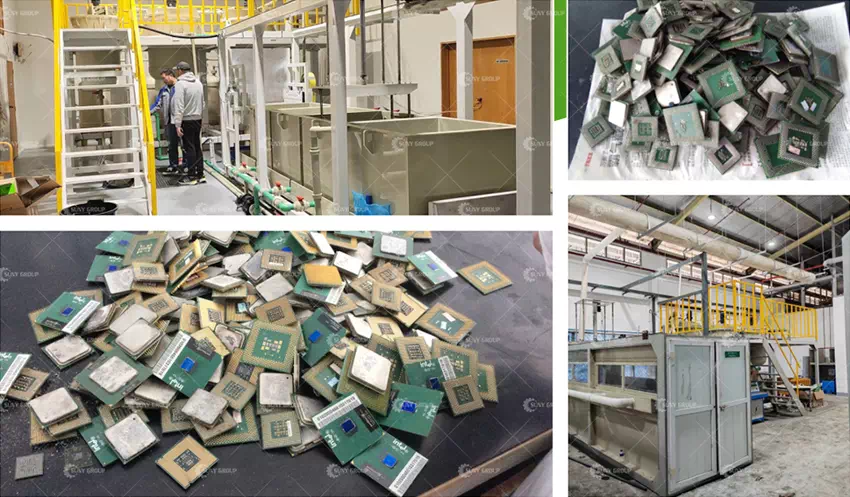
Electronic Waste Gold Recycling Customers Raw Materials

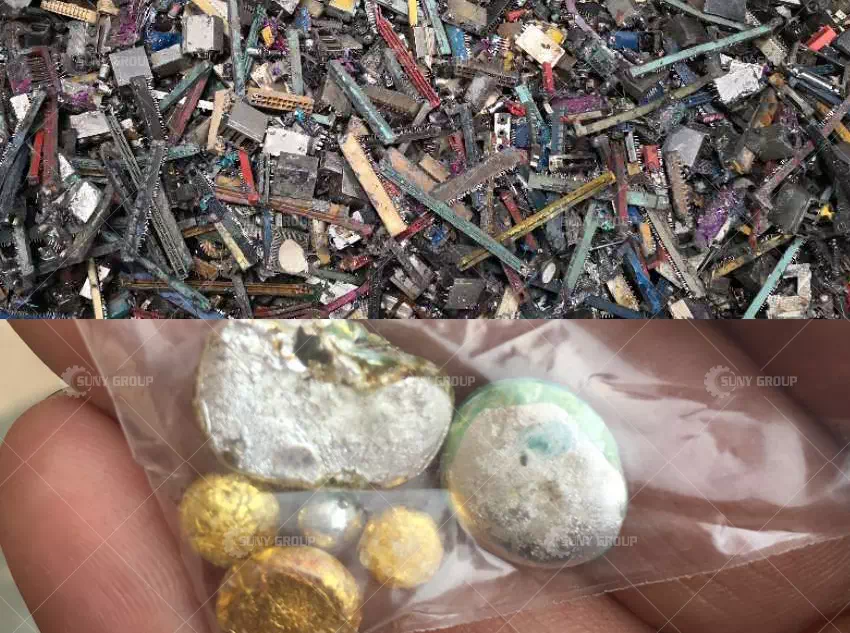
Discarded computer circuit boards, such as CPUs, memory modules, and graphics cards.

Various connectors, plugs, and pins.

Gold/silver-plated circuit boards (PCBs).

Other electronic components or waste materials are plated with precious metals.

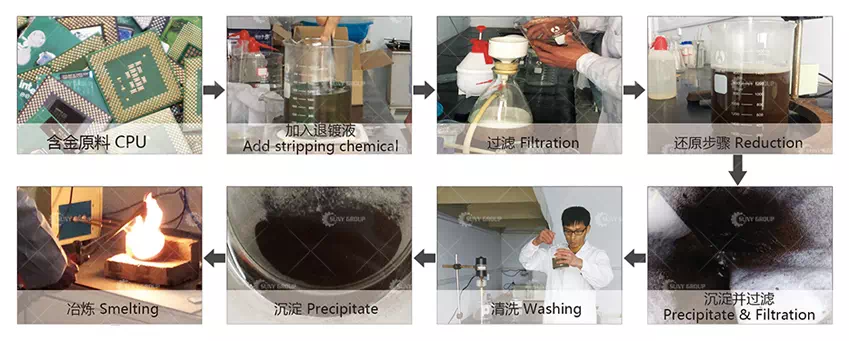
PROCESS FLOW

The main recovery process of this system can be summarized into the following key steps:

Electronic Waste Gold Recycling Process

Pre-treatment: Firstly, materials containing gold plating, such as discarded E-Waste CPUs, are collected and pre-treated.

Adding Stripping Chemical: The pre-treated gold-plated materials are placed into the equipment, and specific Stripping Chemicals are added.

Chemical Deplating: Inside the equipment, the stripping agent reacts rapidly with the gold layer, efficiently dissolving precious metals like gold or silver from the substrate surface. The image indicates a stripping speed of $0.5-2.0$ mm/min (this likely refers to the efficiency of the stripping process per unit time, as the thickness of plating is usually in micrometers).

Leaching, Precipitation & Filtration: The stripped solution contains dissolved precious metal ions. Through the subsequent steps of leaching, precipitation, and filtration, the gold ions in the solution are reduced and separated to form a gold precipitate.

Smelting: Finally, the collected gold precipitate is processed through smelting to obtain high-purity recycled gold.

Washing: The residual materials are subjected to washing to ensure maximum recovery rate and for subsequent handling.

MACHINE ADVANTAGES

This system demonstrates significant advantages in efficiency, environmental friendliness, and recovery rate:

Overview of E Waste Gold Recovery Machine

High efficiency and speed: It can rapidly strip the gold layer within seconds to minutes, greatly shortening the recovery cycle.

High purity and separation precision: The recovery efficiency is high; gold can be completely separated from the substrate (such as nickel or tin layers). Images show a separation rate of up to 99%, and the recovered gold is of high purity.

Green and environmentally friendly: The stripping agent used is free of cyanide and highly toxic, meeting increasingly stringent environmental requirements.

High selectivity: The stripping process does not contaminate the underlying substrate (such as nickel or tin layers) (No stain), ensuring the purity of the recovered gold and facilitating subsequent recycling of the substrate.

CUSTOMER SUPPORT

We provide on-site support to 30+ customers, lifetime technical support, detailed technical training, and on-site installation services to ensure the normal operation of the equipment.

Electronic Waste Gold Recycling Customer Site

Categories
Case

Nepal E-waste Recycling Machine Customer Site

Nepal E-waste Recycling Machine Customer Site

Nepal E-waste Recycling Machine Customer Site

Categories
News

Glass Recycling 3 Stage Machine

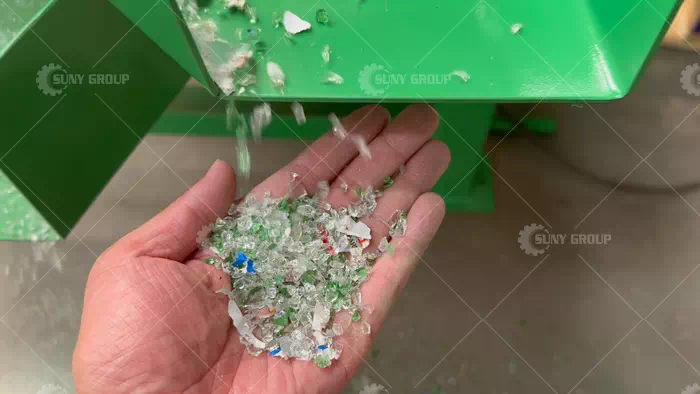
Addressing the issues of uneven particle size and low crushing efficiency in the recycling of glass bottles and glass products, SUNY Group offers a three-stage screening glass crusher. This compact machine integrates crushing, screening, and finished-product grading, processing waste glass into three distinct particle sizes and uniform shapes in a single operation. It is ideal for glass recycling plants, winery recycling systems, waste treatment plants, and environmental resource recycling companies.

The core highlight of the equipment is its “three-stage screening structure,” which separates glass particles of different sizes within the same machine, eliminating the need for secondary manual screening, significantly improving efficiency, and ensuring consistent finished product quality.

Glass Recycling 3 Stage Machine

Glass Recycling 3 Stage Machine

Three-stage structure design: Fully automated from crushing to grading

This glass crusher features a high-efficiency crushing chamber design that quickly crushes waste materials such as glass bottles and glasses, creating uniformly mixed particles in the first stage.

The crushed material enters the internal three-stage screening system, where precisely controlled screen apertures and vibration trajectories achieve automated particle separation:

• Coarse particle zone: Suitable as a base material for recycled glass, usable in building material filling or glass remelting processes. • Medium-particle zone: Commonly used in decorative materials, garden paving, and reprocessing of art glass.

• Fine-particle zone: Can be used as a base material for high-value-added products such as glass sand and abrasives.

The entire process requires no additional air classification or water washing. The equipment can operate continuously and stably, is easy to maintain, has low overall energy consumption, and is suitable for long-term high-load operation.

If you would like to learn more about the technical details, processing capacity, configuration options, or equipment quotation for the three-stage screening glass crusher, please feel free to contact us. We will provide professional advice and deliver complete solutions tailored to your material and output requirements.

Categories
Case

Small Household Appliance Recycling Production Line Customer Site

Small Household Appliance Recycling Production Line Customer Site

Small Household Appliance Recycling Production Line Customer Site

Categories
News

Waste Computer Printed Circuit Board Recycling Solution

Electronic waste, particularly discarded computer circuit boards (PCBs), contains high-value components such as copper, tin, gold, silver, and resin. A complete PCB recycling technology solution can achieve efficient recycling through mechanical and physical sorting methods.

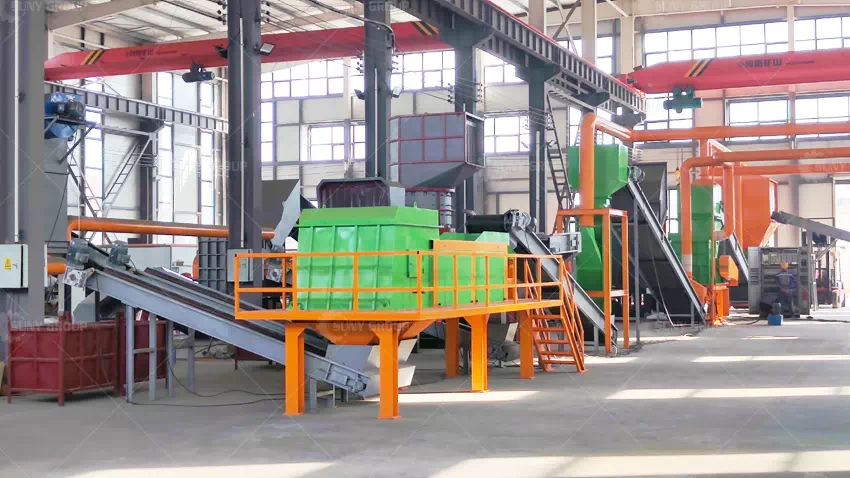
The high-efficiency crushing system is the starting point for recycling. Computer motherboards, graphics cards, circuit boards, etc., are automatically fed into the crusher via a conveyor system. The multi-stage hammer crushing structure gradually pulverizes the PCBs to a uniform particle size, creating a more ideal particle shape for subsequent sorting. Compared to single-stage crushing, multi-stage crushing significantly reduces dust generation, and the metal particles are more regularly shaped, which is beneficial for revealing differences in metal conductivity. If higher fineness is required, a fine-grinding system can be added to grind the material to 60-120 mesh, improving the separation of metals and non-metals. The entire crushing process operates in a closed loop and can be combined with a pulse dust collector to ensure stable and compliant dust emissions.

Waste Computer Printed Circuit Board Recycling Solution

Waste Computer Printed Circuit Board Recycling Solution

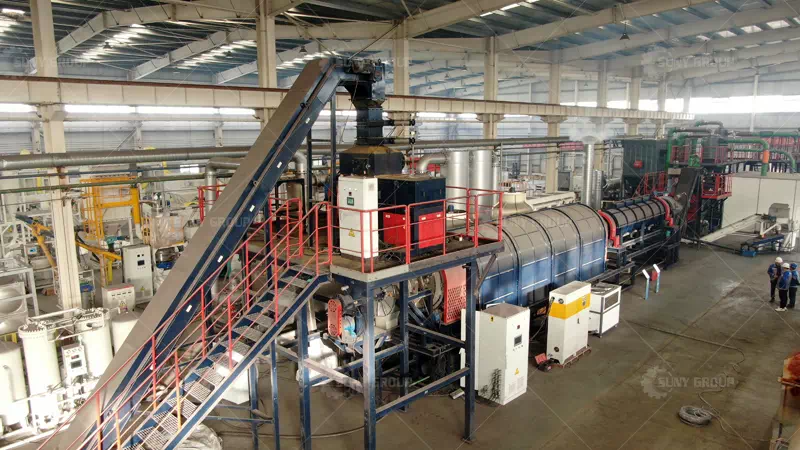
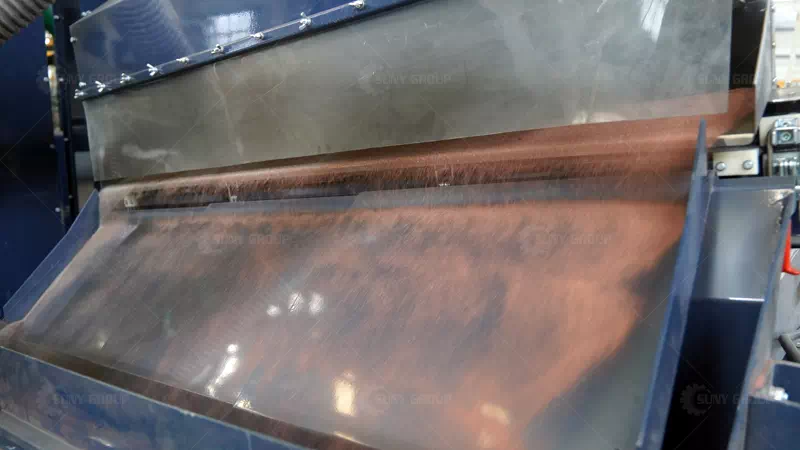
The crushed mixture then enters the electrostatic separation system, which is the core technology of the entire solution. PCB metals are highly conductive, while resin and glass fiber are non-conductive. Utilizing this difference, electrostatic separators can precisely separate metal powders into individual finished products, enabling the recovery of copper, tin, and other metal resources without chemical solvents. For higher purity, secondary electrostatic separation or gravity separation can be used for further purification, ensuring a stable copper recovery rate of over 98%. The recovered resin powder can be used in board materials, building materials, or fillers, forming a reusable closed loop. For larger production lines, high-frequency eddy current separators can be added to recover residual conductive particles, improving overall resource utilization.

For recycling plants with higher production demands, automated feeding and stable output can be achieved, equipped with water-cooling or air-cooling systems to maintain stable power output even during long-term operation. The entire PCB recycling line can be customized, including crushing capacity, sorting accuracy, dust removal systems, and finished product output methods, suitable for various scenarios such as electronic waste recycling companies, environmental resource regeneration plants, and metal sorting and processing lines. Whether processing old computer mainframes, TV boards, communication equipment boards, or upgrading large-scale recycling plant production lines, it can be quickly deployed and achieve stable profitability. If you are looking for a computer PCB recycling solution with higher recycling rates, greater environmental friendliness, and better cost-effectiveness, please get in touch with us for detailed production capacity parameters, equipment specifications, and investment configuration suggestions. A mature recycling system will help you turn electronic waste into substantial profits.