



Metal scrap processing has always been a critical factor affecting costs and efficiency. Bulky, irregularly shaped, and diverse metal offcuts, if improperly handled, not only occupy space but also increase transportation and disposal costs. Against this backdrop, the two-shaft shredder has become an indispensable core piece of equipment in the metal recycling industry.
The operating principle of the dual-shaft shredder is straightforward, yet its structural design is highly targeted. Equipped with two counter-rotating cutting shafts inside, the machine processes scrap metal by tearing, shearing, and compressing large pieces into smaller particles. By adjusting blade configurations and arrangements, output particle sizes can be customized to meet subsequent processing requirements, facilitating sorting, transportation, or smelting operations.
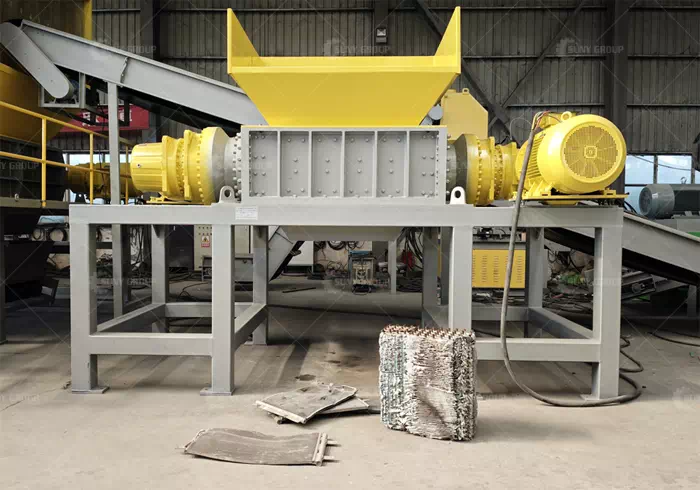
Two-Shaft Shredder for Metal Scrap
From an application perspective, the greatest value of this equipment lies in its robust processing capacity and broad adaptability. It can reliably shred steel, aluminum, and other non-ferrous metals. For manufacturers, large volumes of scrap, stamping waste, or discarded components can be reintroduced into the recycling system after shredding, enabling resource reuse and reducing raw material waste.
Economically, investing in a twin-shaft shredder often yields direct returns. On one hand, significantly reduced metal scrap volume lowers storage and transportation costs. On the other hand, processed metals gain higher recycling value—either sold or remelted—thereby cutting overall production expenses. Additionally, the equipment’s heavy-duty structural design enables prolonged continuous operation, enhancing production stability and minimizing downtime losses.
Furthermore, dual-shaft shredding equipment demonstrates strong industry adaptability. Beyond metal materials, it can process industrial waste like plastics and rubber in certain applications, making it a versatile pre-treatment solution for multiple sectors, including automotive manufacturing, appliance recycling, and building demolition.
At its core, the twin-shaft shredder transcends being merely a crushing machine; it serves as a vital tool for enterprises to optimize waste management, reduce costs, and enhance resource utilization. For metal processing and recycling companies, establishing efficient pre-treatment capabilities first grants a competitive edge in the race toward resource circulation and green manufacturing.