• SUNY Fackbook
  • SUNY Linkedin
  • SUNY Youtube
Categories
News

Waste Tire Production Recycling Equipment

With the continuous growth of car ownership, the number of waste tires is increasing year by year. Tires are bulky and difficult to decompose; improper disposal not only occupies land resources but also poses serious environmental hazards. Addressing this industry pain point, waste tire recycling equipment utilizes mechanized and automated processing methods to transform waste tires into high-value rubber granules or powder, achieving efficient resource recycling.

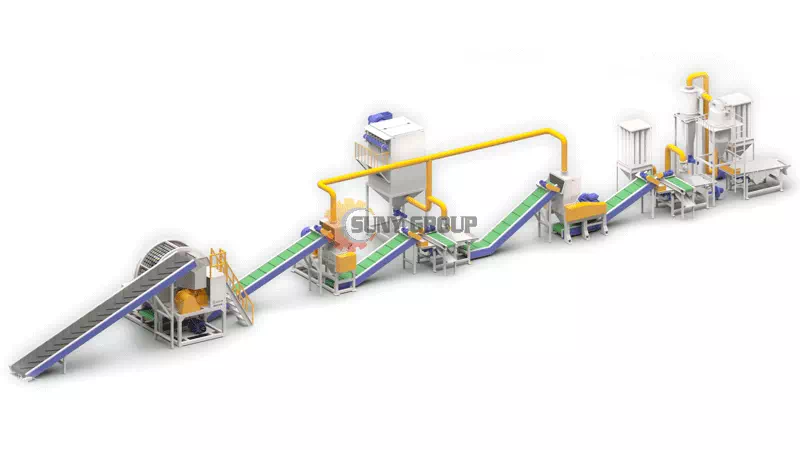
This waste tire recycling equipment is designed with the core principles of “high separation rate, high stability, and high adaptability.” The entire line integrates cutting, crushing, grinding, screening, and steel wire separation, enabling continuous and stable processing from whole tires to finished rubber products. The equipment features a reasonable structural layout and compact footprint, suitable for recycling plants and resource recovery projects of varying scales.
Waste Tire Production Recycling Equipment

Waste Tire Production Recycling Equipment

During the production process, tires are first pre-processed by a cutting or shredding system, breaking down whole tires into sizes suitable for subsequent processing. Then, multi-stage crushing and grinding devices are used to fully separate the rubber from the internal steel wires. An efficient magnetic separation system accurately separates the steel wires from the rubber, ensuring high cleanliness of the rubber granules and stable metal recovery rates, laying a solid foundation for subsequent deep processing.

Depending on customer requirements for the finished rubber particle size, the equipment can be flexibly configured with coarse grinding, fine grinding, and multi-layer screening systems to produce rubber granules or ultra-fine rubber powder. The particle size range is controllable, and the finished product specifications are stable, meeting the requirements of various application fields such as rubber products, modified asphalt, and sports flooring. The entire line’s parameters are adjustable, allowing customers to adjust product structure according to market demand.

In terms of equipment design, the waste tire recycling production line utilizes wear-resistant key components and a stable transmission system, ensuring smooth operation, low failure rate, and easy maintenance. The automated control system reduces manual intervention, lowering labor intensity while improving overall production efficiency and operational safety.

Furthermore, the equipment fully considers environmental protection and energy saving requirements, with good dust and noise control and reasonable energy consumption levels, meeting the standards of green production in the modern resource recovery industry. Through the efficient processing of waste tires, it not only recovers rubber and steel wire resources but also significantly reduces the environmental burden, creating sustainable economic value for enterprises.

This waste tire recycling production equipment provides a mature and reliable solution for the tire recycling and rubber regeneration industry. For information on equipment configuration, production capacity options, or project details, please contact us to get the most suitable tire recycling solution for your needs.
Categories
Case

Tire Recycling Equipment at the Site in Mongolia

Tire Recycling Equipment at the Site in Mongolia

Tire Recycling Equipment at the Site in Mongolia

Categories
News

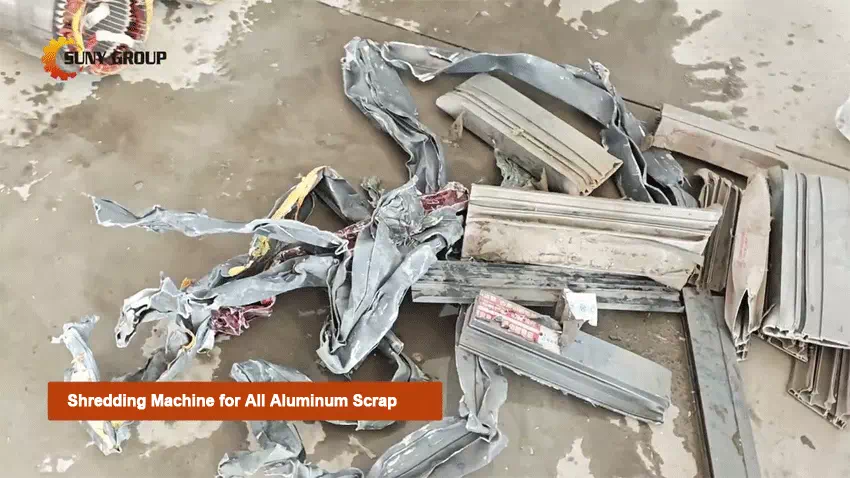
Shredding Machine for All Aluminum Scrap

Whether it’s used beverage cans, aluminum profiles, or scrap aluminum sheets and foils, all aluminum scrap needs effective size reduction before subsequent sorting and smelting. The aluminum scrap shredder is the core starting equipment in the recycling production line. Its function is to break down large, irregularly shaped aluminum products into uniformly sized materials, creating stable conditions for subsequent sorting, impurity removal, and smelting.

Working Principle and Configuration of Aluminum Shredders

Professional aluminum scrap shredders typically employ a heavy-duty structural design, combined with high-strength rotors and wear-resistant blades, to shear, tear, and crush aluminum products at a stable rotational speed. Taking the recycling of used beverage cans as an example, the entire shredding system can consist of a single-shaft shredder and a granulator. The material is first coarsely shredded, and then further refined to achieve a more uniform final output size. If a finer particle size is required, a hammer mill unit can be added to reduce the output size further, meeting the needs of various recycling processes. The machine is designed for continuous operation and can withstand high-load conditions for extended periods, making it suitable for large-scale aluminum recycling projects.

Equipment Advantages and Application Value

High-performance aluminum scrap shredders offer significant advantages in efficiency, safety, and economy. First, their high-throughput design allows for rapid processing of large quantities of aluminum scrap, significantly improving the overall efficiency of the recycling line. Second, the equipment is equipped with a comprehensive safety protection system, including safety locks, emergency stop, and anomaly monitoring functions, effectively reducing risks during operation and maintenance. Third, the machine has a robust structure and long-lasting wear parts, which help reduce long-term operating and maintenance costs.

With its excellent adaptability to various types of aluminum scrap, this type of shredding equipment is widely used in used beverage can recycling, industrial aluminum scrap processing, and comprehensive metal recycling projects. Through stable and efficient front-end shredding, it not only improves the overall efficiency of aluminum recycling but also creates higher economic value for subsequent sorting and smelting processes.

Categories
News

Small-Scale Copper Cable Granulator Machine

In the field of waste wire and cable recycling, not all enterprises require large-scale production lines. For recycling stations, small processing plants, or new investors entering the industry, compact copper cable granulator machines—characterized by their small footprint, low investment, and high recovery rate—often hold greater practical value. These devices are designed specifically for small-to-medium-scale copper wire recycling, with core advantages in compact structure and simple operation.

Core Equipment Structure and Workflow

Copper Wire Granulator Principle

Copper Wire Granulator Principle

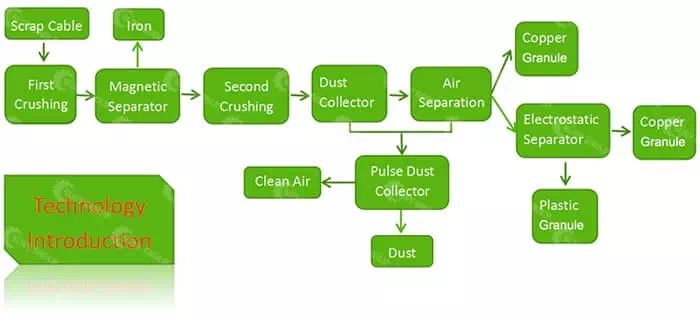
Small copper cable granulator machines typically consist of a crushing system, an air separation system, and a screening system. Upon entering the equipment, waste cables are first cut and crushed by a high-intensity crushing unit, thoroughly separating the copper core from the outer plastic layer. The crushed mixture then enters the air separation zone, where lighter plastic particles are preliminarily separated from heavier copper granules through airflow differences.

Subsequently, the material undergoes secondary classification via a vibrating screen or fine screening device, concentrating copper particles for higher purity. The entire process operates continuously, achieving stable recycling without frequent manual intervention.

Equipment Advantages and Applications

Compared to large-scale production lines, small copper cable pelletizers offer greater efficiency in energy consumption, maintenance, and space requirements. Typically featuring modular design, they enable swift installation and commissioning, making them suitable for facilities with limited floor space. With proper configuration, a single unit can process diverse waste wire types, including household wiring, communication cables, and certain automotive harnesses.

Crucially, these compact systems maintain high copper-plastic separation efficiency while significantly lowering initial investment thresholds. For recyclers seeking rapid ROI and flexible operations, such copper cable granulators offer a practical solution that balances efficiency and cost-effectiveness.

Designed around the principles of “adequate, user-friendly, and durable,” our compact copper cable granulator enables high-value recycling of scrap wires even at limited scales. It provides stable and reliable technical support for small to medium-sized recycling projects. For further details, feel free to contact us anytime.

Categories
Case

Taiwan Cable Wire Recycling Machine On-site

Taiwan Cable Wire Recycling Machine On-site

Taiwan Cable Wire Recycling Machine On-site

Categories
News

Circuit Board Shredding and Sorting Machine

Waste circuit boards contain both recyclable metals, such as copper, and non-metallic materials, such as fiberglass and resin, resulting in a complex structure and interwoven components. If the process route is not designed properly, it will not only result in low recovery rates but also cause equipment wear and energy waste. The core value of a circuit board shredding and sorting production line lies in achieving efficient separation of metals and non-metals through a scientific process and specialized equipment.

Process Flow

The entire production line usually starts with pre-treatment. Clean waste circuit boards first enter a double-shaft shredder for primary crushing, cutting the entire board into uniformly sized pieces. The goal of this stage is not to crush the material to a very fine size, but to create stable and controllable feeding conditions for subsequent fine crushing.

The material after primary crushing enters a secondary fine crushing equipment, where the size is further reduced through shearing and impact. Subsequently, the material is processed into a particle size suitable for sorting using a pulverizer, allowing for the physical separation of metals and non-metals as much as possible, providing a foundation for downstream sorting.

Technical Principles

After crushing, the material enters the sorting system. First, using the difference in specific gravity, a gravity separation device is used to initially separate the denser metal particles (such as copper) from the lighter non-metallic materials (fiberglass, resin powder).

However, in actual operation, some metals are pulverized during the grinding process and mixed with non-metallic powders, making it difficult to completely separate them with single-stage gravity separation. At this point, electrostatic separation equipment plays a crucial role. Through the difference in conductivity of different materials, electrostatic separation can further accurately separate metal powder from non-metallic powder, significantly improving the overall recovery rate and product purity.

After multi-stage sorting, the metal and non-metallic materials are collected separately and can be directly used in subsequent deep processing or sales.

Compared to simple and crude direct crushing methods, this multi-stage crushing and combined sorting system for circuit boards is more suitable for long-term stable operation. The entire line has a high degree of automation, requires minimal manual intervention, and has controllable operating parameters, effectively reducing operating costs.

At the same time, the system has significant advantages in terms of recovery rate, environmental compliance, and equipment durability, meeting both resource recycling needs and current environmental requirements for electronic waste treatment. For companies looking to enter the e-waste recycling business, this mature and well-defined process solution is easier to implement and offers greater potential for sustained profitability.

Categories
Electronic Waste Recycling Plant Products

Home Appliance Recycling Machine

BACKGROUND AND PAIN POINTS ADDRESSED

In an era of rapid electronic replacement, our Home Appliance Recycling Machine addresses the global e-waste challenge head-on. By promoting a circular economy, it recovers valuable metals and polymers from discarded units.

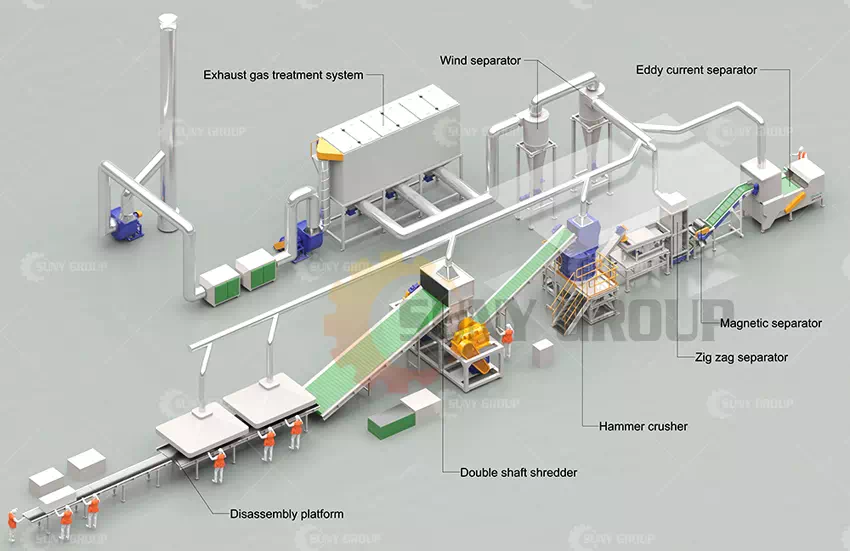
This sophisticated system is anchored by a heavy-duty four-shaft shredder, specifically engineered to process entire refrigerators etc and washing machines with ease. It is further refined by high-speed hammer crushers and a precision sorting suite—including magnetic and eddy current separators—ensuring the highest purity for recovered copper, aluminum, and steel.

APPLICABLE MATERIALS & OUTPUTS

APPLICABLE MATERIALS & OUTPUTS

Target Input: Large Appliances: Refrigerators, washing machines, and air conditioners.

Consumer Electronics: Televisions, monitors, and smaller household e-waste (WEEE).

High-Value Outputs:

Metals: Ferrous metals (Steel/Iron), Non-ferrous metals (High-purity Copper and Aluminum).

Non-Metals: Recyclable Plastics (ABS/PS) and compressed Foam (EPS) particles.

PROCESS FLOW

Home Appliance Recycling Machine Process Flow

The home appliance recycling machine utilizes a fully automated, multi-stage physical separation logic:

Pre-processing Platform: Manual disassembly to safely remove hazardous components and large contaminants.

Primary Shredding: A high-torque Four-Shaft Shredder performs the first coarse cut, easily breaking down metal frames.

Refined Crushing: A secondary Hammer Crusher reduces the material into uniform granules, ensuring complete liberation of different material types.

Air Density Sorting: The Zig-zag Separator uses airflow to extract lightweight foam and dust from the heavier stream.

Magnetic Extraction: High-intensity magnetic separators automatically capture ferrous metal fragments.

Advanced Metal Sorting: An Eddy Current Separator identifies and ejects non-ferrous metals like copper and aluminum from the plastic residues.

Emission Control: Integrated dust collection and exhaust gas treatment systems maintain a clean working environment.

MACHINE ADVANTAGES

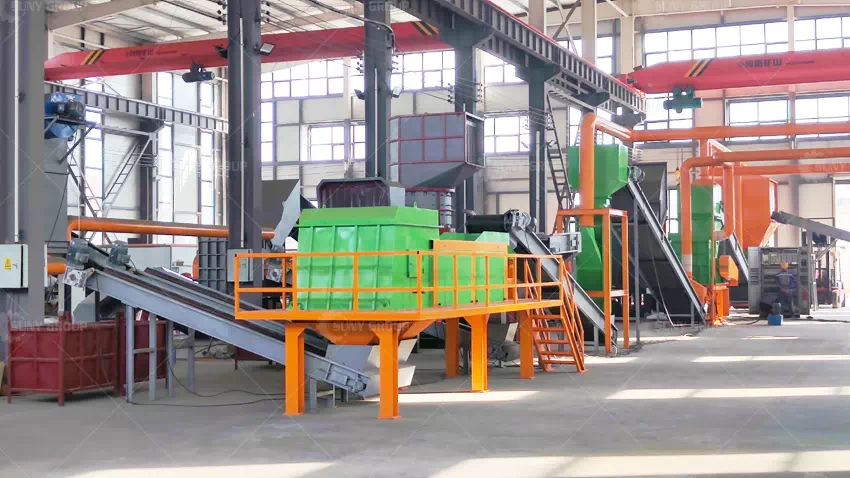
Home Appliance Recycling Machine Manufacturing Workshop

Cutting-Edge 4-Shaft Technology: The newly upgraded four-shaft shredder significantly boosts throughput while reducing the risk of material jams compared to traditional two-shaft models.

Exceptional Separation Purity: Through a combination of density, magnetic, and eddy current sorting, the machine achieves a recovery purity rate of up to 99% for metallic components.

Environmental Integrity: Equipped with a professional foam dust collection system and exhaust gas filtration, it effectively eliminates secondary pollution during the recycling process.

Intelligent Automation: The PLC-driven control system allows for real-time monitoring and minimal manual intervention, optimizing operational safety and cost-efficiency.

Industrial-Grade Durability: Constructed with high-strength, wear-resistant alloys, the machine is designed for continuous, heavy-load industrial performance.

TECHNICAL PARAMETERS

Model Power Capacity(SET/H)
HA-20 176kw 20-40
HA-40 275kw 40-60
HA-60 500kw 60-80
HA80 680kw 80-100
Categories
News

Lithium Battery Recycling Machine for Metal Separation

The Lithium Battery Recycling Machine is an industrial solution specifically designed for the safe processing and resource recovery of waste lithium-ion batteries. It is widely applied in the recycling of power batteries, energy storage batteries, and consumer electronics batteries. With the rapid development of the new energy industry, the volume of waste lithium batteries continues to grow. Efficiently recovering high-value metals such as lithium, cobalt, nickel, copper, and aluminum has become a key focus for the global recycling industry. Through physical crushing and multi-stage sorting processes, lithium battery recycling equipment achieves efficient separation of battery materials, providing a stable and high-quality raw material foundation for downstream metallurgical purification.

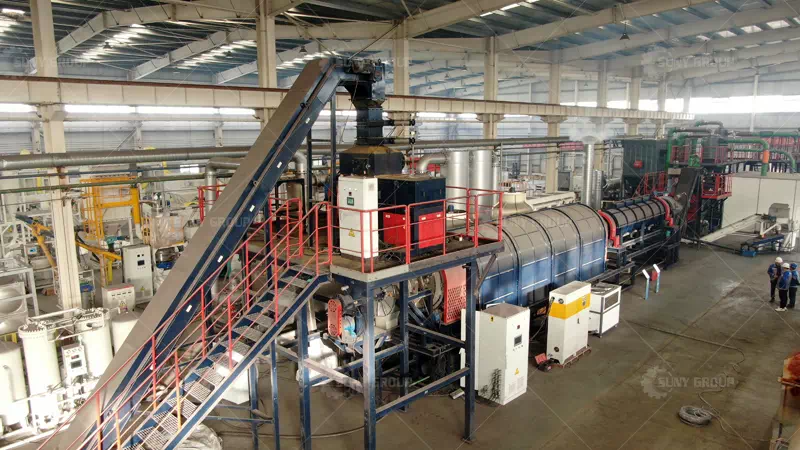
Lithium Battery Recycling Machine Manufacturing Factory

Lithium Battery Recycling Machine Manufacturing Factory

This lithium battery recycling production line is suitable for processing various types of lithium-ion battery materials, including ternary lithium batteries (NCM/NCA), lithium iron phosphate batteries (LiFePO4), lithium manganese batteries, as well as cylindrical, prismatic, and pouch batteries. The integrated line design accounts for variations in battery structures and chemical systems, ensuring disassembly and separation without damaging valuable metal components. This approach enhances overall recovery rates and economic value.

During the recycling process, the equipment first performs safe discharge treatment on waste lithium batteries to mitigate safety risks in subsequent crushing stages. The batteries then enter the crushing system, where multi-stage crushing thoroughly separates the battery casing, electrode materials, and separators. The crushed mixed material undergoes drying to effectively remove moisture and residual electrolyte, preventing powder agglomeration and improving sorting precision. Through physical separation techniques like screening, air classification, and magnetic separation, black powder, copper, aluminum, iron, and separator materials are progressively isolated, yielding high-purity, low-impurity recovered products.

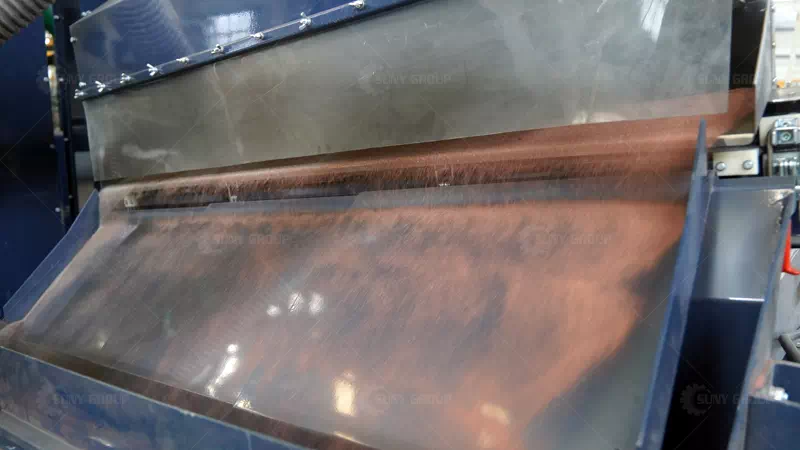
Metals Recovered from the Separation and Recycling of Lithium Batteries

Metals Recovered from the Separation and Recycling of Lithium Batteries

The final product includes black powder rich in key metals like lithium, cobalt, nickel, and manganese, serving as vital feedstock for downstream hydrometallurgical or pyrometallurgical processes. Copper and aluminum are recovered in granular or flake form with high purity and value. Steel casings and separator materials also enter recycling channels. The comprehensive recovery rate of the entire lithium battery recycling system exceeds 98%, with copper and aluminum content in black powder maintained at extremely low levels, meeting industrial-grade recycling standards and export market requirements.

For projects of varying scales, lithium battery recycling machines offer multiple capacity configurations, with processing capabilities ranging from hundreds of kilograms to several tons per hour. This makes them suitable for startup recyclers, medium-sized recycling plants, and large-scale new energy recycling centers. The modular design facilitates installation, maintenance, and future expansion, allowing customization based on customer feedstock types and site conditions.

Long-term investment in lithium battery recycling equipment aligns with environmental and sustainable development policies while offering strong commercial returns. With sustained high prices for lithium, cobalt, and nickel, spent lithium batteries represent a vital “urban mine.” Through the stable operation of lithium battery recycling machines, enterprises can achieve resource reuse, reduce raw material costs, and secure advantageous positions within the new energy recycling supply chain.

Categories
News

Solar Panel Separation and Recycling Machine

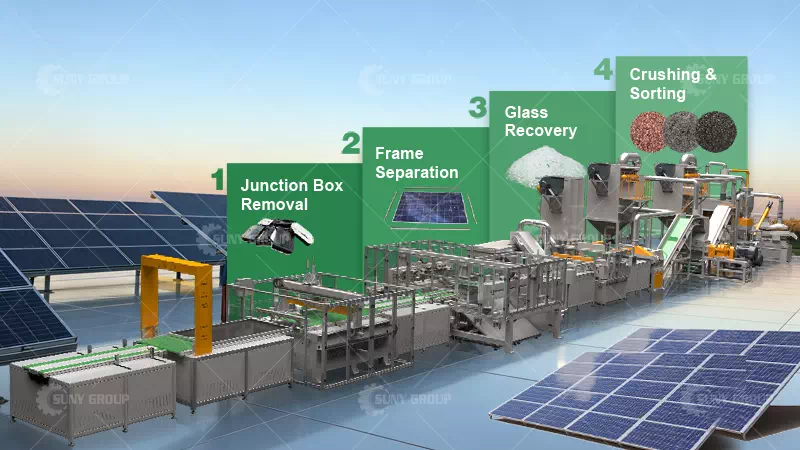
In the recycling process of solar panels, the separation of the junction box (J-box), aluminum frame, and glass is the most fundamental and critical first step. Traditional manual dismantling is labor-intensive, poses high safety risks, and is inefficient and inconsistent, making it difficult to meet the realistic needs of centralized decommissioning and large-scale recycling of photovoltaic modules. Based on this industry pain point, SUNY GROUP’s fully automatic solar panel separation and recycling machine, through systematic and automated design, transforms the originally complex and time-consuming dismantling process into a stable, efficient, and sustainable industrial process.

Core Process Flow and Key Technical Equipment

The entire separation and recycling line starts with a 3D vision inspection system, one of the core technologies enabling “precise dismantling.” This system can quickly scan photovoltaic modules entering the production line, accurately identify the position of the junction box, and even locate multiple J-boxes on the same module simultaneously, providing reliable data support for subsequent automatic removal.

Solar Panel Separation and Recycling Machine

Guided by the vision system, the J-box removal device operates precisely, avoiding damage to the main body of the solar panel, significantly improving the success rate and efficiency of dismantling. After the junction box separation, the module enters the aluminum frame and glass separation unit. This equipment uses a reasonable mechanical structure and automatic control logic to achieve rapid frame detachment and complete glass stripping while ensuring safety. The entire process is seamlessly integrated, runs stably, and is ideal for continuous, large-scale processing of decommissioned photovoltaic modules.

Equipment Advantages and Application Value

The solar panel separation and recycling machine has a high degree of automation, significantly reducing reliance on manual labor and minimizing personnel safety risks. It also ensures high-quality separation of various components at the front end of the recycling process, creating favorable conditions for subsequent glass recycling, silicon material processing, and metal recycling. The equipment has a mature structure, stable operation, and controllable maintenance costs, making it suitable for professional photovoltaic recycling factories or integrated new energy recycling centers.

With the continuous growth of global photovoltaic installations, the number of decommissioned modules is rapidly increasing. Efficient and standardized front-end separation equipment will become a key foundation for industry development. This automatic separation and recycling machine not only improves recycling efficiency but also provides reliable technical support for the circular utilization of photovoltaic resources.

For detailed configuration, technical parameters, and quotation plans for the solar panel separation and recycling machine, please feel free to contact us for professional advice tailored to your project needs.

Categories
Electronic Waste Recycling Plant Products

Precious Metal Refining System for E-waste

BACKGROUND AND PAIN POINTS ADDRESSED

The rapid global proliferation of electronic devices has led to an exponential increase in Electronic Waste (E-waste). This waste stream is not merely a disposal challenge but a hidden urban mine, containing significant quantities of valuable metals, including base metals (like Copper and Aluminum) and Precious Metals (PMs) such as Gold, Silver, Platinum, and Palladium. Traditional landfilling of e-waste is environmentally destructive, leading to soil and water contamination by hazardous substances like lead and mercury.

Our Precious Metal Refining System for E-waste emerges from the dual necessity of environmental stewardship and resource conservation. With primary metal ore grades declining and mining operations facing stringent regulations, recovering PMs from secondary resources like e-waste offers a more sustainable, profitable, and circular economic model. This system provides a technological solution to safely, efficiently, and environmentally responsibly unlock the value trapped within discarded electronics, transitioning waste into wealth.

APPLICABLE MATERIALS

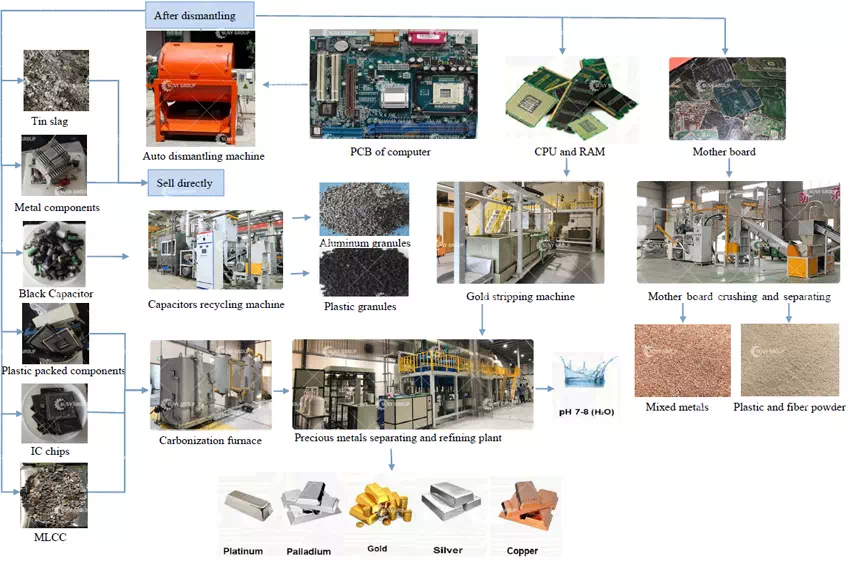
The system is engineered to process a variety of metal-rich electronic waste components, often referred to as e-scrap. The primary feedstocks include:

PCB of computer (Printed Circuit Boards): The most common source, rich in Copper, Gold, Silver, and Palladium.

CPU and RAM (Central Processing Units and Random Access Memory): High-density sources of Gold, particularly gold-plated pins.

Motherboard: Contains a mix of base and precious metals.

Metal components: Various metal parts from electronic assemblies.

Black Capacitor, IC chips, MLCC (Multi-Layer Ceramic Capacitors): Concentrated sources of Palladium, Silver, and Tantalum (not pictured, but often refined).

Tin slag: Residue from soldering processes, containing Tin and other metals.

Plastic packed components: Various encapsulated electronic parts.

Extracting Precious Metals from Electronic Waste

Output (Refined Products)

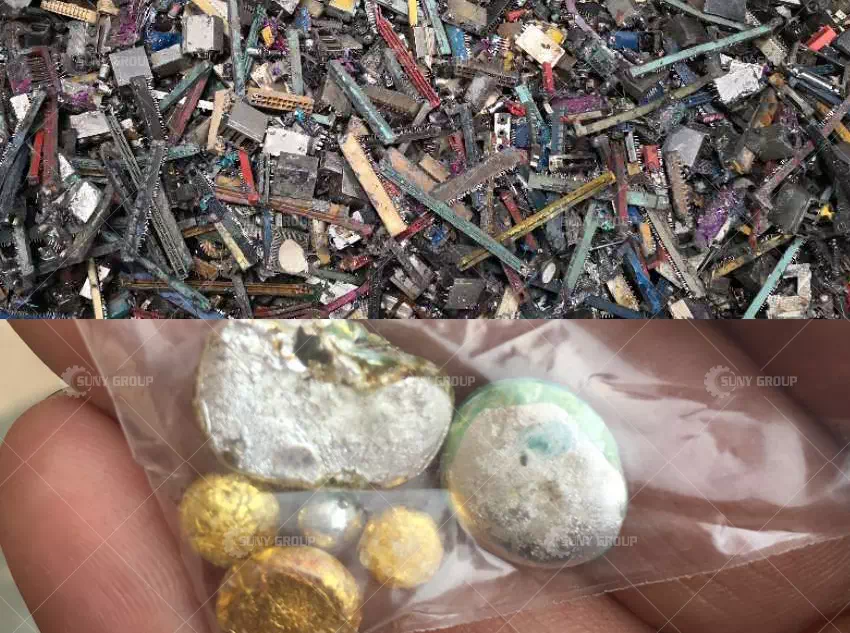
The refining process yields high-purity metals ready for industrial reintroduction:

Platinum (Pt)

Palladium (Pd)

Gold (Au)

Silver (Ag)

Copper (Cu)

Mixed metals (a fraction from the initial separation, which may undergo further refining or sale)

Plastic and fiber powder (separated clean fraction, which can be recycled or used for energy recovery)

Aluminum granules (from initial separation of aluminum components)

PROCESS FLOW

Electronic Waste Precious Metal Refining Process Flow

The Precious Metal Refining System operates through a highly integrated, three-prongedapproach: Mechanical, Pyro-metallurgical, and Hydro-metallurgical processing.Theprocess begins with mechanical dismantling and separation (Auto Dismantling,Crushing) toreduce particle size and separate metallic fractions, sometimes using carbonization(Pyrolysis) to remove organics. The concentrated metal fraction then enters the pyro-metallurgical stage(Intermediate Frequency and Converting Furnaces) where high-temperature smelting and oxidation processes occur (~1200-1500°C), separating basemetals into slag and concentrating precious metals into a molten alloy. This alloy is quenchedby Water Broken granulation. Finally, the hydro-metallurgical stage (Gold Stripping,RefiningPlant) uses chemical leaching to selectively dissolve and then recover individual high-puritymetals (Au, Ag, Pt,Pd) through techniques like precipitation and electrowinning,ensuringthe final effluent is environmentally managed with pH adjustment.

MACHINE ADVANTAGES

Precious Metal Refining System for E-waste Customer Site

High Recovery Rate and Purity: The integrated process, combining efficient mechanicalseparation with robust pyro- and hydro-metallurgical steps, ensures maximum recovery ofPMs (≥ 99%) and yields final products of high purity (e.g., Au ≥ 99.99%).

Adaptability to Diverse Feedstock: The system is flexible, capable of handling a widerange of e-waste types, from high-grade CPU to complex low-grade PCBs and plastic-richcomponents, optimizing the processing route for each.

Environmental Responsibility: Compared to crude, open-air burning or acid leaching,the system incorporates dedicated equipment (e.g., carbonization and gold stripping) andwater treatment (pH adjustment) to manage hazardous byproducts, reduce air pollution,and minimize wastewater discharge.

Closed-Loop and Circular Economy: By recovering not only PMs but also base metalsand non-metallic fractions (plastics), the system significantly reduces the need forprimary mining, contributing directly to the circular economy model.

Automated and Safe Operation: The inclusion of machinery like the Auto Dismantlingmachine enhances operational safety and efficiency, reducing manual exposure topotentially hazardous materials.

Categories
Products Shredder Equipment

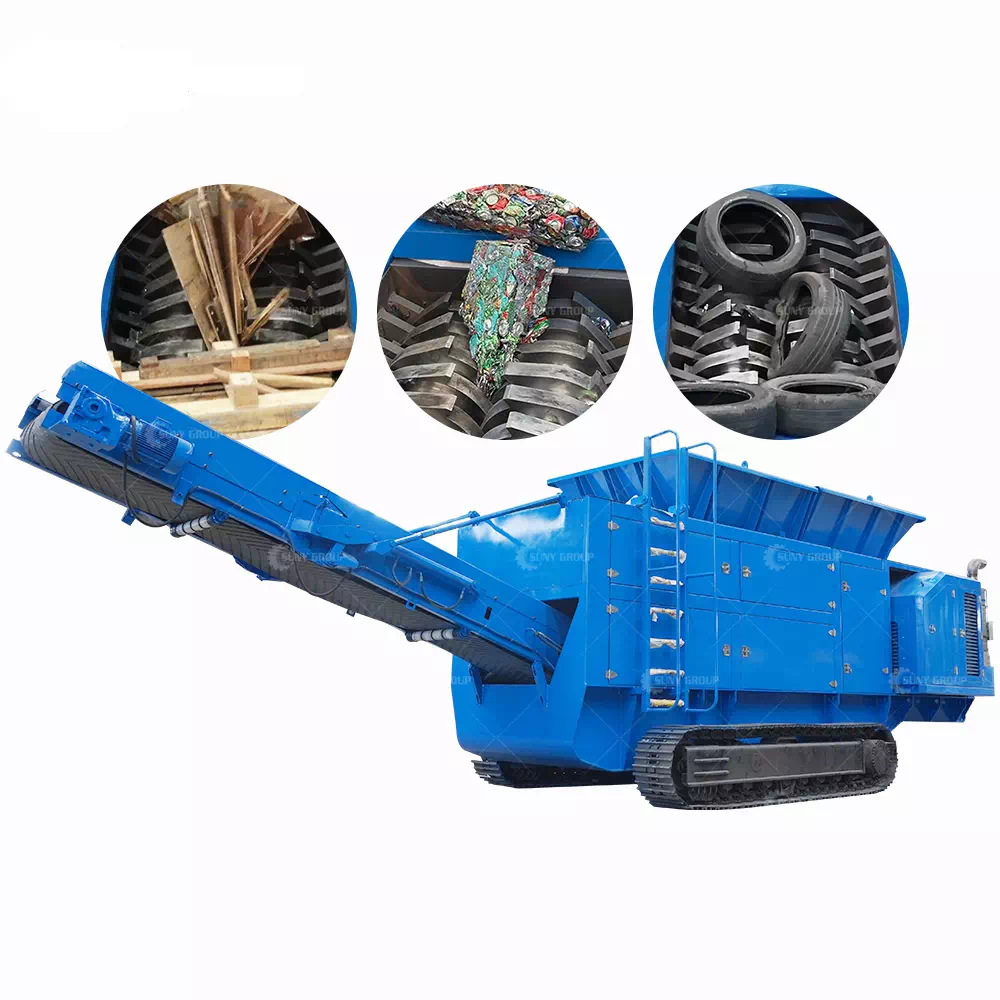
Mobile Dual Shaft Shredder Machine

BACKGROUND AND PAIN POINTS ADDRESSED

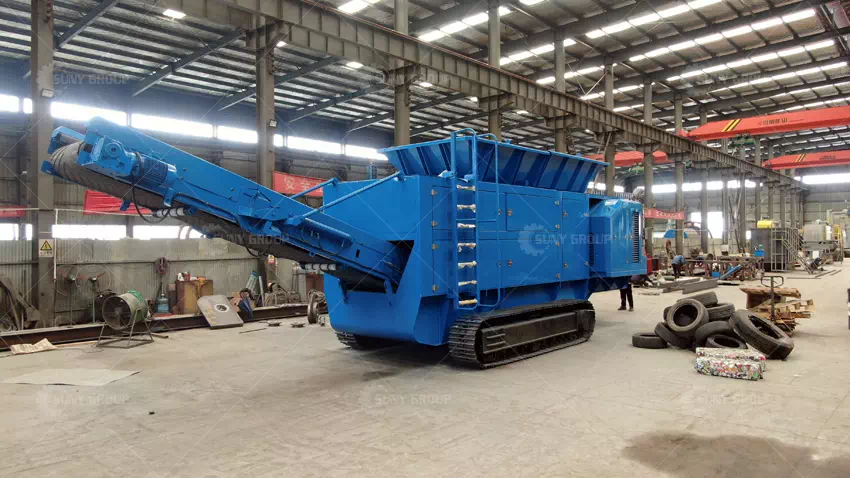
With increasingly stringent global resource recycling and environmental regulations, traditional stationary crushing equipment faces challenges such as high transportation costs and low efficiency when dealing with large quantities of dispersed and complex materials on-site. SUNY GROUP’s mobile tracked industrial shredder integrates feeding, crushing, conveying, and power systems into a single unit. Thanks to its superior mobility, it brings the crushing operation directly to the material site, greatly simplifying the processing workflow and becoming a significant innovation in the field of solid waste resource utilization.

This equipment features a heavy-duty crawler chassis with a large slope design, providing robust obstacle-crossing and climbing capabilities, with a maximum travel speed of 1km/h. The shredding main unit is equipped with alloy cutting tools that have an outer diameter of 600mm, ensuring superior cutting efficiency. The main power transmission system utilizes a hydraulic transmission mode and incorporates pressure detection and protection functions to guarantee safe and stable operation. Additionally, an optional suspended magnetic separator is available to effectively remove ferrous impurities from the raw materials, enhancing material purity and increasing durability. The machine supports both remote controller and manual operation, and comes with a remote diagnosis function for easy maintenance.

APPLICABLE MATERIALS

Raw Materials and Finished Products

The Mobile Dual Shaft Shredder Machine is engineered to process a vast and complex range of solid waste for volume reduction, pre-treatment, and resource recovery.

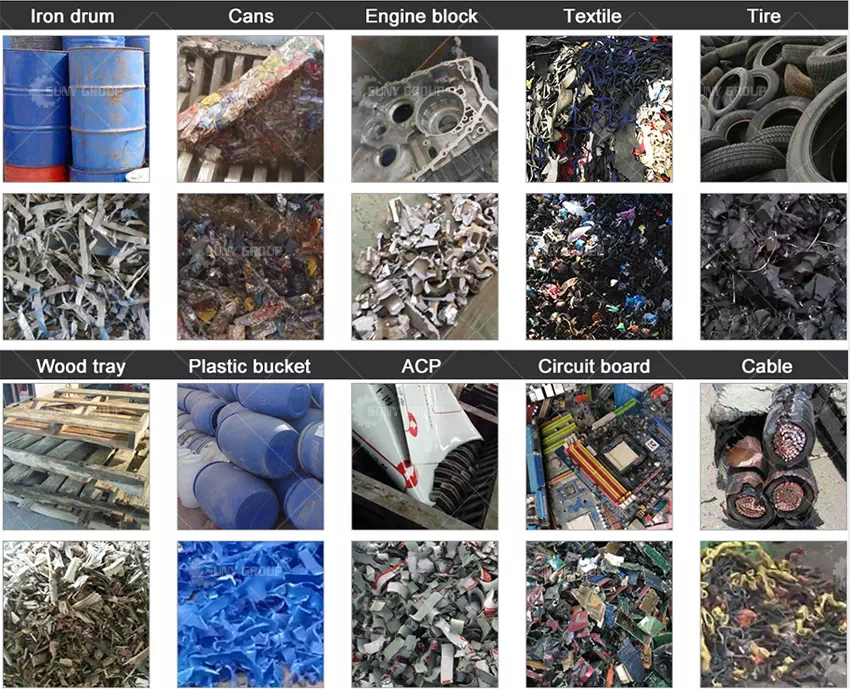
Applicable Materials: Car bodies, tires, engine blocks, scrap furniture, iron drums, radiators, textiles, clothes, plastic pallets, wood trays, waste cables, plastic film, circuit boards, spring mattresses, and other industrial scraps.

Output: The shearing action results in uniformly sized, higher-density shredded materials, which are easier to handle for subsequent recycling, incineration, or landfilling, thus maximizing the economic value and processing efficiency of the waste.

STRUCTURE AND WORKING PRINCIPLE

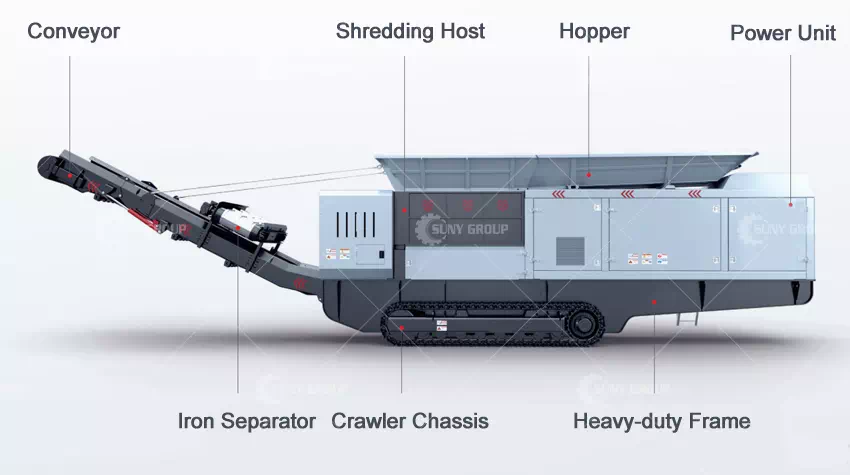
The main structure includes the Hopper , Shredding Host (with wear-resistant alloy tools), Crawler Chassis (heavy-duty design), Foldable Conveyor (high stacking height and strong conveying capacity), Dedicated Power Unit, Hydraulic Transmission System, and PLC Control System. Customization for Planetary Reducers is also supported.

Mobile Shredder Structure Diagram

Raw material is fed into the shredding host via the hopper, where the hydraulically driven dual-shafts perform low-speed, high-torque shearing and tearing actions. This dual-shaft shearing working principle is highly effective for processing large, tough, and easily-tangled materials. The shredded material is then discharged by the foldable conveyor. The entire process is precisely controlled by the PLC system, which uses pressure detection systems to monitor the load on transmission parts in real-time. Safety protection functions are instantly activated upon overload, ensuring the equipment’s operational safety.

MACHINE ADVANTAGES

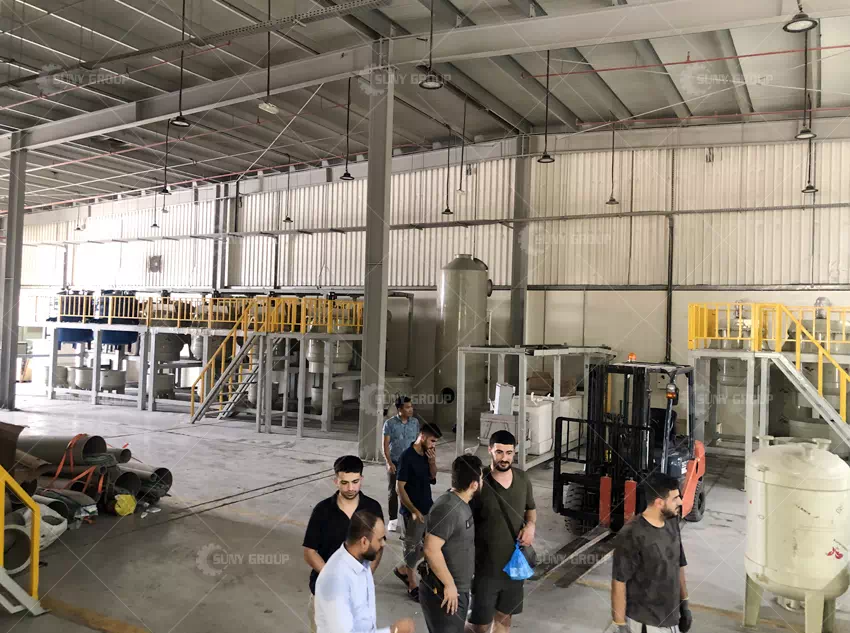
Mobile Shredder Manufacturing Workshop

1. Superior Mobility (Mobile Dual Shaft Shredder Machine): Heavy-duty tracked chassis allows for on-site shredding operations without complex infrastructure.

2. High Reliability and Safety: Hydraulic transmission system with built-in protection features; pressure detection systems ensure safe and stable operation.

3. Efficient Shredding Performance: Equipped with wear-resistant alloy tools and a dual-shaft shearing design for high cutting efficiency and relatively low energy consumption.

4. Integrated Design: Integrates feeding, shredding, power, and conveying, offering high integration and flexible site transfers.

5. Remote Intelligent Control: Supports remote and manual operation, complete with remote diagnosis for convenient operation and maintenance.

Categories
News

Professional PCB Electronic Waste Recycling Solutions

In electronic waste recycling, printed circuit board (PCB) recycling typically begins with physical processing of the motherboards. A complete motherboard crushing and sorting system consists of a crusher, magnetic separator, air classifier, and dust removal system. The equipment crushes waste PCB motherboards into uniform particles, and then uses multi-stage sorting technology to completely separate metals from non-metals. The metal portion is mainly copper, which can be directly used for smelting and recycling; the non-metal portion is mainly resin fiber powder, which can be used to prepare building materials or fillers. The entire process is fully enclosed, requiring no chemical additives, ensuring environmental friendliness, cleanliness, and safety, making it the core equipment for processing large volumes of PCBs.

Precious Metal Extraction System

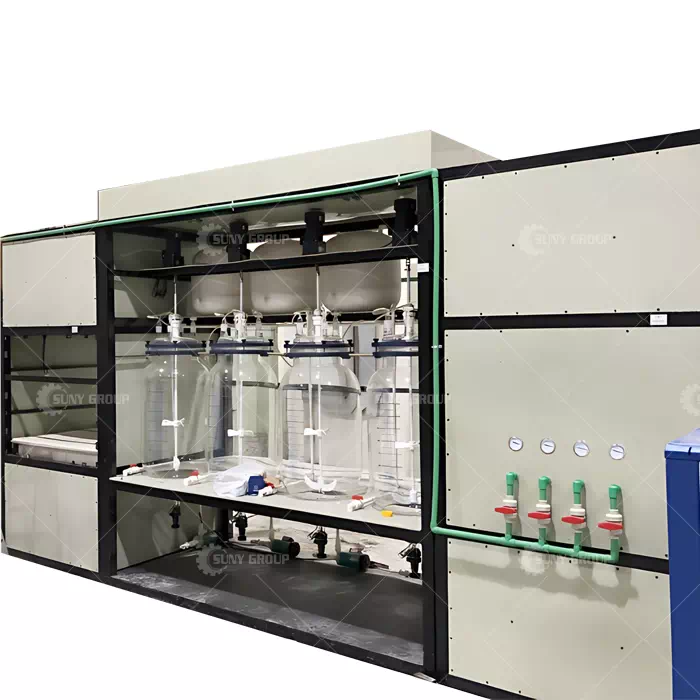
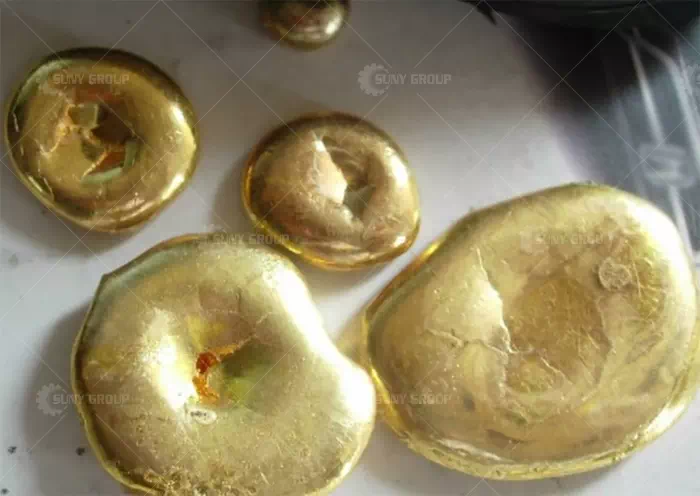
In addition to basic metals, waste PCBs also contain precious metals such as gold, silver, and palladium, which are the most valuable part of electronic waste. A precious metal extraction system typically comprises a gold recovery unit, a precious metal separation tank, and a refining system. Taking a gold extraction system as an example, a specialized gold stripping device can separate the gold layer from the surface of electronic components under controlled reaction conditions. After filtration, precipitation, and refining, high-purity gold powder or gold ingots are obtained. The entire system boasts high reaction efficiency and low loss, and is equipped with waste gas and wastewater treatment equipment to ensure the production process meets environmental standards.

One-Stop E-Waste Recycling Solution

Combining motherboard crushing and sorting with precious metal extraction means that companies can simultaneously recover multiple resources such as copper, resin powder, gold, and silver, maximizing the utilization of electronic waste. SUNY GROUP’s complete e-waste recycling lines are not only highly automated and easy to operate, but can also be customized to meet the production needs of different countries and companies, providing customers with a sustainable and profitable recycling model.

If you are looking for complete e-waste recycling equipment or would like to learn more about precious metal extraction solutions, please feel free to contact us for more technical information and pricing details.