



Lithium Battery Recycling Machine for Metal Separation
The Lithium Battery Recycling Machine is an industrial solution specifically designed for the safe processing and resource recovery of waste lithium-ion batteries. It is widely applied in the recycling of power batteries, energy storage batteries, and consumer electronics batteries. With the rapid development of the new energy industry, the volume of waste lithium batteries continues to grow. Efficiently recovering high-value metals such as lithium, cobalt, nickel, copper, and aluminum has become a key focus for the global recycling industry. Through physical crushing and multi-stage sorting processes, lithium battery recycling equipment achieves efficient separation of battery materials, providing a stable and high-quality raw material foundation for downstream metallurgical purification.
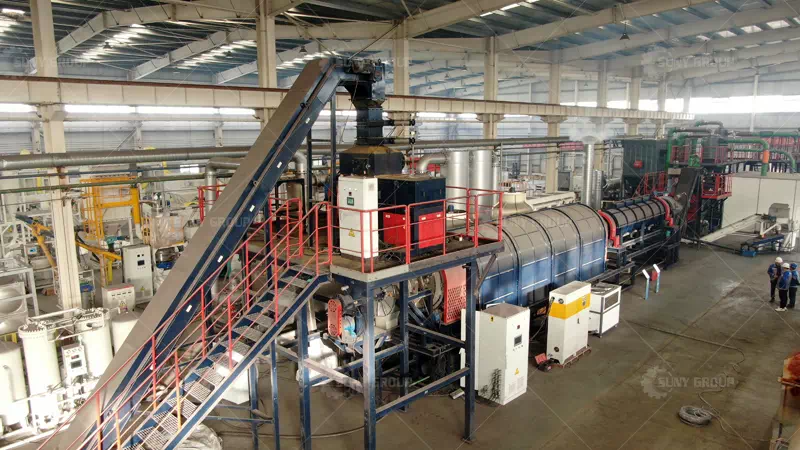
Lithium Battery Recycling Machine Manufacturing Factory
This lithium battery recycling production line is suitable for processing various types of lithium-ion battery materials, including ternary lithium batteries (NCM/NCA), lithium iron phosphate batteries (LiFePO4), lithium manganese batteries, as well as cylindrical, prismatic, and pouch batteries. The integrated line design accounts for variations in battery structures and chemical systems, ensuring disassembly and separation without damaging valuable metal components. This approach enhances overall recovery rates and economic value.
During the recycling process, the equipment first performs safe discharge treatment on waste lithium batteries to mitigate safety risks in subsequent crushing stages. The batteries then enter the crushing system, where multi-stage crushing thoroughly separates the battery casing, electrode materials, and separators. The crushed mixed material undergoes drying to effectively remove moisture and residual electrolyte, preventing powder agglomeration and improving sorting precision. Through physical separation techniques like screening, air classification, and magnetic separation, black powder, copper, aluminum, iron, and separator materials are progressively isolated, yielding high-purity, low-impurity recovered products.
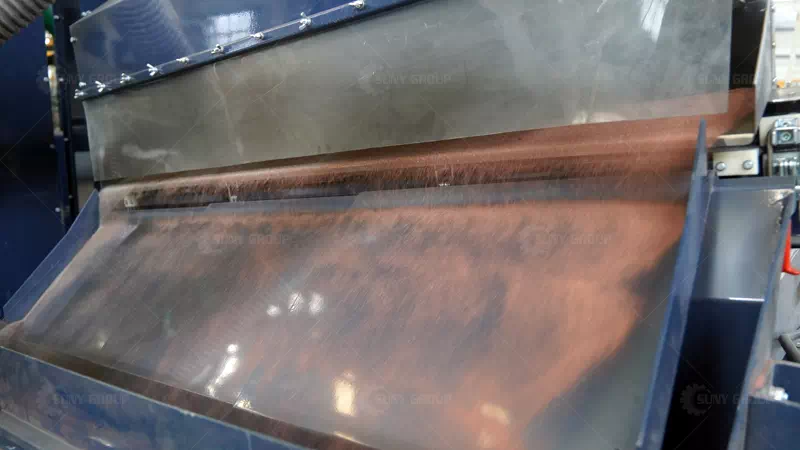
Metals Recovered from the Separation and Recycling of Lithium Batteries
The final product includes black powder rich in key metals like lithium, cobalt, nickel, and manganese, serving as vital feedstock for downstream hydrometallurgical or pyrometallurgical processes. Copper and aluminum are recovered in granular or flake form with high purity and value. Steel casings and separator materials also enter recycling channels. The comprehensive recovery rate of the entire lithium battery recycling system exceeds 98%, with copper and aluminum content in black powder maintained at extremely low levels, meeting industrial-grade recycling standards and export market requirements.
For projects of varying scales, lithium battery recycling machines offer multiple capacity configurations, with processing capabilities ranging from hundreds of kilograms to several tons per hour. This makes them suitable for startup recyclers, medium-sized recycling plants, and large-scale new energy recycling centers. The modular design facilitates installation, maintenance, and future expansion, allowing customization based on customer feedstock types and site conditions.
Long-term investment in lithium battery recycling equipment aligns with environmental and sustainable development policies while offering strong commercial returns. With sustained high prices for lithium, cobalt, and nickel, spent lithium batteries represent a vital “urban mine.” Through the stable operation of lithium battery recycling machines, enterprises can achieve resource reuse, reduce raw material costs, and secure advantageous positions within the new energy recycling supply chain.